

 |
 |
 |
 |
 |
 |
 |
 |
 |
 |
 |
 |
 |

September 30, 2003
Disparate Exchange
Don't read this report on humanity's defects from the NEF unless you're feeling courageous
Don't you just love it when you hear a phrase for the first time, and these days you can quickly google it? Disparate Exchange questions which rich countries have been trading arms with which poor countries and with what globalisation strategy in mind
See this google starting with last year's European conference of the People's Global Action Group
Next I have to tell you that censorship policies come in all shapes and unexpected places so rather than have a conversation with you directly on the most important humanitarian controversy of our life and times- I'd better refer you to this book
and then this one ; particularly terrifying are the historical insights on p58-60 (if you can't get your hand on these quickly, and need them , contact me and I'll email you)
permalink

Don't you just love it when you hear a phrase for the first time, and these days you can quickly google it? Disparate Exchange questions which rich countries have been trading arms with which poor countries and with what globalisation strategy in mind
See this google starting with last year's European conference of the People's Global Action Group
Next I have to tell you that censorship policies come in all shapes and unexpected places so rather than have a conversation with you directly on the most important humanitarian controversy of our life and times- I'd better refer you to this book
and then this one ; particularly terrifying are the historical insights on p58-60 (if you can't get your hand on these quickly, and need them , contact me and I'll email you)
permalink
Comments:
Post a Comment
Links to this post
Commercial Alert -embedded products an affront to basic honesty?
NEWS RELEASE
For Immediate Release: September 30, 2003
For More Information Contact: Gary Ruskin (503) 235-8012
Commercial Alert Asks FCC, FTC to Require Disclosure of Product Placement on TV
Commercial Alert today requested the Federal Communications Commission and the Federal Trade Commission to require prominent disclosure of embedded advertising on television, including product placement, product integration, plot placement, title placement, paid spokespersons and virtual advertising. Increasingly, programs with these embedded ads resemble infomercials.
Commercial Alert’s petition to the FCC contains a request for a rule-making to require conspicuous and concurrent disclosure of embedded ads on TV, a complaint against TV networks for failure to comply with federal sponsorship identification requirements, and a request for investigation of current product placement practices on TV. Commercial Alert also asked the FTC to investigate TV product placement practices, and to issue new guidelines for disclosure of TV product placement.
“Embedded advertising is the new reality of television, and it is time for the Commission to address it. TV networks and stations regularly send programs into American living rooms that are packed with product placements and other veiled commercial pitches. But they pretend that these are just ordinary programming rather than paid ads. This is an affront to basic honesty,” wrote Commercial Alert in its petition to the FCC.
“To prevent stealth advertising, and ensure that viewers are fully aware of the efforts of advertisers to embed ads in programming, the Commission should require TV networks and stations to prominently disclose to viewers that their product placements are ads. In addition, product placements should be identified when they occur.”
The FCC and FTC documents are available here
Commercial Alert is a national nonprofit organization whose mission is to keep the commercial culture within its proper sphere, and to prevent it from exploiting children and subverting the higher values of family, community, environmental integrity and democracy.
Commercial Alert has more than 2000 members, representing all 50 states and the District of Columbia. For more information, visit our website at http://www.commercialalert.org. permalink
For Immediate Release: September 30, 2003
For More Information Contact: Gary Ruskin (503) 235-8012
Commercial Alert Asks FCC, FTC to Require Disclosure of Product Placement on TV
Commercial Alert today requested the Federal Communications Commission and the Federal Trade Commission to require prominent disclosure of embedded advertising on television, including product placement, product integration, plot placement, title placement, paid spokespersons and virtual advertising. Increasingly, programs with these embedded ads resemble infomercials.
Commercial Alert’s petition to the FCC contains a request for a rule-making to require conspicuous and concurrent disclosure of embedded ads on TV, a complaint against TV networks for failure to comply with federal sponsorship identification requirements, and a request for investigation of current product placement practices on TV. Commercial Alert also asked the FTC to investigate TV product placement practices, and to issue new guidelines for disclosure of TV product placement.
“Embedded advertising is the new reality of television, and it is time for the Commission to address it. TV networks and stations regularly send programs into American living rooms that are packed with product placements and other veiled commercial pitches. But they pretend that these are just ordinary programming rather than paid ads. This is an affront to basic honesty,” wrote Commercial Alert in its petition to the FCC.
“To prevent stealth advertising, and ensure that viewers are fully aware of the efforts of advertisers to embed ads in programming, the Commission should require TV networks and stations to prominently disclose to viewers that their product placements are ads. In addition, product placements should be identified when they occur.”
The FCC and FTC documents are available here
Commercial Alert is a national nonprofit organization whose mission is to keep the commercial culture within its proper sphere, and to prevent it from exploiting children and subverting the higher values of family, community, environmental integrity and democracy.
Commercial Alert has more than 2000 members, representing all 50 states and the District of Columbia. For more information, visit our website at http://www.commercialalert.org. permalink
Comments:
Post a Comment
Links to this post
Human Value Profile 1 - Joy of Accomplishment
In this 10 part series- dont worry, we welcome debate if you see a different value as more important or have a better wording (this is a great medium for iterative editing)
1 Let's get rid of organisations that do not make people happy
As Professor Mihaly Csikszentmihalyi (author of Good Business) proves in over 15000 interviews - happiness flowing into focus is the greatest explainer of human productivity. Focus is where a worthwhile organisation should lead co-workers in serving value that is always evolving as uniquely relevant to others - purposefully making the most of the organisation and each co-worker who makes a difference in serving people. Organisational psychologists tell us that learning to make a difference is the greatest human drive (even greater than sex). Organisations spend more than any other of our time (of our lives, that magic span we each only have one go at, and which we do well to mutually respect) , so why isnt it obvious that Joy of Accomplishment is the number 1 criteria that would benefit every true stakeholder who values an organisation?
Here are some reasons why we may have lost sight of the obvious:
1) While a transparent model of organisation would multiply value for everyone who 'invests' time or money or trust in the organisation, the late 20th century made some serious mathematical errors in valuation and reporting of organisations which let speculators take over many companies- speculators do not invest; they do not care for any other stakeholder than themselves; they destroy value for every other person and having made a bubble out of an organisation in temporarily maximising a number, they then short it as the value bubble bursts making as many people as miserable as they can take from.
2) In recent decades, we didn't do too well with marketing either - at least not in the sense that Drucker originally declared this as the most valuable sustenance of organisation - he meant learning knowledge of how external stakeholders future needs were changing so everyone inside the organisation could improve their work in time and innovate to serve those needs. If we did that, not only would everyone be linked in a joy of accomplishment but stakeholders would continuously market a company by recommending it to all their peers. And companies would grow depending on how great their gravity in attracting human values reality-making, instead of just image-making.
3) Unfortunately, there are certain types of media that need a health warning because they specialise in the exact opposite of the joy of accomplishment. This depressing direction can be termed the gratification of apathy. So it might be naive to expect that the news of the most wonderful of human value multipliers will be propagated by those who shout messages loudest or celebrate form over the magic which human beings materialise when we are most caring at serving others or fastest at learning inspirational abilities. If you agree with this post, why not make an immediate difference by clicking it to someone who may circulate the idea?
more methods of trust
trustways1.ppt permalink
1 Let's get rid of organisations that do not make people happy
As Professor Mihaly Csikszentmihalyi (author of Good Business) proves in over 15000 interviews - happiness flowing into focus is the greatest explainer of human productivity. Focus is where a worthwhile organisation should lead co-workers in serving value that is always evolving as uniquely relevant to others - purposefully making the most of the organisation and each co-worker who makes a difference in serving people. Organisational psychologists tell us that learning to make a difference is the greatest human drive (even greater than sex). Organisations spend more than any other of our time (of our lives, that magic span we each only have one go at, and which we do well to mutually respect) , so why isnt it obvious that Joy of Accomplishment is the number 1 criteria that would benefit every true stakeholder who values an organisation?
Here are some reasons why we may have lost sight of the obvious:
1) While a transparent model of organisation would multiply value for everyone who 'invests' time or money or trust in the organisation, the late 20th century made some serious mathematical errors in valuation and reporting of organisations which let speculators take over many companies- speculators do not invest; they do not care for any other stakeholder than themselves; they destroy value for every other person and having made a bubble out of an organisation in temporarily maximising a number, they then short it as the value bubble bursts making as many people as miserable as they can take from.
2) In recent decades, we didn't do too well with marketing either - at least not in the sense that Drucker originally declared this as the most valuable sustenance of organisation - he meant learning knowledge of how external stakeholders future needs were changing so everyone inside the organisation could improve their work in time and innovate to serve those needs. If we did that, not only would everyone be linked in a joy of accomplishment but stakeholders would continuously market a company by recommending it to all their peers. And companies would grow depending on how great their gravity in attracting human values reality-making, instead of just image-making.
3) Unfortunately, there are certain types of media that need a health warning because they specialise in the exact opposite of the joy of accomplishment. This depressing direction can be termed the gratification of apathy. So it might be naive to expect that the news of the most wonderful of human value multipliers will be propagated by those who shout messages loudest or celebrate form over the magic which human beings materialise when we are most caring at serving others or fastest at learning inspirational abilities. If you agree with this post, why not make an immediate difference by clicking it to someone who may circulate the idea?
more methods of trust
trustways1.ppt permalink
Comments:
Post a Comment
Links to this post
Human businesses
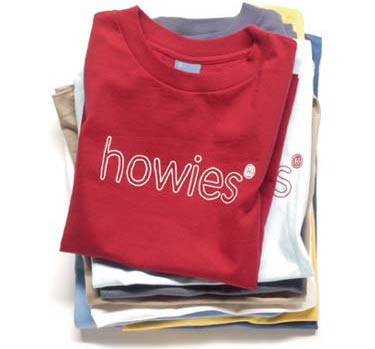 As you'll have realised, we're not reluctant to criticise and challenge brands that don't seem to work to meet the real needs of humans. We also want to celebrate organisations that show a more enlightened approach.
One I like is Howies. This is a casual clothing business that oozes human values. It's website is funny, controversial, informative... Here's just one example :
In Finland the temperatures get real cold. During winter it gets down to -45 degrees. Even if you’re a tree, you tend to feel it. When the temperatures hit this low the trees just stop growing. They conserve their energy and just wait for the weather to change.
Come Spring and the warmer weather breaks, they start growing again. This quirk of nature makes for an interesting story. It also makes for strong wood too. Wood that will last longer than wood from faster growing trees found in warmer countries.
Appropriately, it’s this patience that gives the wood its real strength. And sets itself apart from other wood.
We could all learn a lot from a Finnish tree.
Howies has serious views about the environment, packaging and the way the world is spinning and it manages to convey these with both passion and wit. Some of their gear carries a political message, some doesn't. There's a lightness of touch to match a seriousness of purpose. permalink
Comments:
Post a Comment
Links to this post
September 28, 2003
Bragging about change
Another UK brand has rebranded. Abbey National was a mutual organisation that became a bank... and went quite badly wrong. Now its rebranded itself as just "Abbey" with all sorts of claims about how its changed. (I've blogged more on Abbey here).
This reminds me of a very intensive personal development workshop I was on. Over 4 days with not much sleep, a group of us got to know each other really well, and had no real contact with the outside world. Towards the end, the facilitators gave us some great advice: don't go back to your family telling them how much you've changed - instead, ask them how they've been doing. If you have really changed, then they will sense that for themselves - and maybe they will tell you.
This is probably good advice for companies too, yet too often great energy goes into narcissistic bragging that may only raise expectations which are dashed by reality. If a brand is better, why does it need to shout about it... wouldn't it be more confident to let us realise for ourselves? permalink
This reminds me of a very intensive personal development workshop I was on. Over 4 days with not much sleep, a group of us got to know each other really well, and had no real contact with the outside world. Towards the end, the facilitators gave us some great advice: don't go back to your family telling them how much you've changed - instead, ask them how they've been doing. If you have really changed, then they will sense that for themselves - and maybe they will tell you.
This is probably good advice for companies too, yet too often great energy goes into narcissistic bragging that may only raise expectations which are dashed by reality. If a brand is better, why does it need to shout about it... wouldn't it be more confident to let us realise for ourselves? permalink
Comments:
Post a Comment
Links to this post
New additions to Essays & Papers
Comments:
Post a Comment
Links to this post
September 27, 2003
The most valuable risk prevention program
Some of our members are developing this service. If this interests you from any perspective, why not chat with me
RISKING ALL:
Understanding why the conflict between short-term numbers and intangibles valuation of global leadership is unsustainable.
The lost transparency of our times is due to poor mathematics which gives leadership teams incomplete intelligence to govern with.
We can map the same leadership faultlines in:
• Addiction of Andersen to separating business value from social value
• Brittle network underpinning New York’s power
• Culture rotting over time at NASA
The contextual details of this facilitation workshop for leaders are rich but the systemic lesson is simple. The mathematical operands of multiplication and addition have very different outcomes. Models of corporate performance and valuation are too often being computed only with addition’s assumptions of separability, whereas the trust-flow governance, which is vital for seeing what will happen next, needs to value multiplication’s connectivity.
Our mapping overviews guarantee that you can see how to prevent corporate meltdown from: what one or more local society sees as extreme corporate irresponsibility, or incomplete modelling of network connectivity, or failing to consistently understand how the human relationships of productivity and demand compound culturally.
The future is unsustainable for any organisation, however big, that fails to enable - at every audit cycle - the detection of emerging conflicts. These continuously happen naturally as the environment changes or whenever the internal system forgets that knowledge management depends on people’s emotional intelligences and relationship solidarity. The only unknown is exactly when risking all with intangibles will cause a particular leadership team to lose all their reputation. Why would any board room wish this eventuality upon themselves when simple transparency mapping and multiplicative valuation prevent these systemic risks?
Facilitation Notes
Whilst we can customise the workshop on demand, our recommended format revolves round a pair of 2-day retreats involving two board room teams. Such facilitation opens up peer benchmarking and leadership challenging of each other’s transparency assumptions. If leaders of a global company, or government service, do not have one peer organisation that they already trust for collaborative innovation and benchmarking of the dynamics of living systems, then that is a signal that a larger scale change facilitation program will need to be designed. permalink
RISKING ALL:
Understanding why the conflict between short-term numbers and intangibles valuation of global leadership is unsustainable.
The lost transparency of our times is due to poor mathematics which gives leadership teams incomplete intelligence to govern with.
We can map the same leadership faultlines in:
• Addiction of Andersen to separating business value from social value
• Brittle network underpinning New York’s power
• Culture rotting over time at NASA
The contextual details of this facilitation workshop for leaders are rich but the systemic lesson is simple. The mathematical operands of multiplication and addition have very different outcomes. Models of corporate performance and valuation are too often being computed only with addition’s assumptions of separability, whereas the trust-flow governance, which is vital for seeing what will happen next, needs to value multiplication’s connectivity.
Our mapping overviews guarantee that you can see how to prevent corporate meltdown from: what one or more local society sees as extreme corporate irresponsibility, or incomplete modelling of network connectivity, or failing to consistently understand how the human relationships of productivity and demand compound culturally.
The future is unsustainable for any organisation, however big, that fails to enable - at every audit cycle - the detection of emerging conflicts. These continuously happen naturally as the environment changes or whenever the internal system forgets that knowledge management depends on people’s emotional intelligences and relationship solidarity. The only unknown is exactly when risking all with intangibles will cause a particular leadership team to lose all their reputation. Why would any board room wish this eventuality upon themselves when simple transparency mapping and multiplicative valuation prevent these systemic risks?
Facilitation Notes
Whilst we can customise the workshop on demand, our recommended format revolves round a pair of 2-day retreats involving two board room teams. Such facilitation opens up peer benchmarking and leadership challenging of each other’s transparency assumptions. If leaders of a global company, or government service, do not have one peer organisation that they already trust for collaborative innovation and benchmarking of the dynamics of living systems, then that is a signal that a larger scale change facilitation program will need to be designed. permalink
Comments:
Post a Comment
Links to this post
September 26, 2003
The Unsustainable Country
Real Cool is Ben Cohen - how Unilever must love his spankbush web, brought to you by the co-founder of Ben & Jerry's
America does and communicates three things differently and with superpower which unfortunately no human being in the rest of the world wants:
-Guzzling oil (because of less oil taxes, the whole economy is addicted to oil guzzling in a way that no other large country is or could sustain)
-Glorifying violence (guns, arms, holywood and tv genre) and propogating other undesirable imagery in a way that real people trying humanitarianly to get on living with each other surely abhor
-Endebting the poor world in a process and leadership policy which goes under such monkey names of free trade and world progress
All of this would matter much less if the rest of the world wasnt under some mistaken impression (look at whose text books are taught, or the policies world leaders bow to in the full glare of the world's biggest business media) that American marketing is world class. Its actually very local in its own shrink-making anxieties and anchored on one of the 20th century's most backward platforms for leadership communications : the advertising spot
Just imagine if corporate leaders tried using any other mode of communications - eg real people dialogues in real places: see www.collapsingworld.org for dialogues the world's crying out to be humanely sponsored - how different would be the global brands and the behaviours they condition not just in customers but in top managers and the'markets'. Without the advertising spot nobody caring about Transparent Corporate Responsibility would have tolerated finding that a top ranked citizen was Enron, almost until the very day that human-poisoning empire imploded. Nobody would have tolerated the big 5 measurements companies mathematical measurement monopoly that is based on the devaluing human being assumption - people are costs (to cut) machines are investments.
From next week on, we seek in this space, to help anyone animate a dialogue on what values they really value most wherever leaders are seeking to commune and systemise human relationships. If global advertising agencies don't want to join in open humanitarian debate, then bully for them permalink
America does and communicates three things differently and with superpower which unfortunately no human being in the rest of the world wants:
-Guzzling oil (because of less oil taxes, the whole economy is addicted to oil guzzling in a way that no other large country is or could sustain)
-Glorifying violence (guns, arms, holywood and tv genre) and propogating other undesirable imagery in a way that real people trying humanitarianly to get on living with each other surely abhor
-Endebting the poor world in a process and leadership policy which goes under such monkey names of free trade and world progress
All of this would matter much less if the rest of the world wasnt under some mistaken impression (look at whose text books are taught, or the policies world leaders bow to in the full glare of the world's biggest business media) that American marketing is world class. Its actually very local in its own shrink-making anxieties and anchored on one of the 20th century's most backward platforms for leadership communications : the advertising spot
Just imagine if corporate leaders tried using any other mode of communications - eg real people dialogues in real places: see www.collapsingworld.org for dialogues the world's crying out to be humanely sponsored - how different would be the global brands and the behaviours they condition not just in customers but in top managers and the'markets'. Without the advertising spot nobody caring about Transparent Corporate Responsibility would have tolerated finding that a top ranked citizen was Enron, almost until the very day that human-poisoning empire imploded. Nobody would have tolerated the big 5 measurements companies mathematical measurement monopoly that is based on the devaluing human being assumption - people are costs (to cut) machines are investments.
From next week on, we seek in this space, to help anyone animate a dialogue on what values they really value most wherever leaders are seeking to commune and systemise human relationships. If global advertising agencies don't want to join in open humanitarian debate, then bully for them permalink
Comments:
Post a Comment
Links to this post
September 25, 2003
New section: Essays and Papers
We've just opened another section of the Beyond Branding website, where we'll put interesting essays and papers - by authors of the book and by other members of The Medinge Group.
permalink
Comments:
Post a Comment
Links to this post
September 24, 2003
Time for Knowledge Management to change organisations in ways that make us proud of a networked world
Once a year, KM's European community huddles together (this year one of my favourite cities Amsterdam Nov 9 to 12). Tell me if you're going to be there and feel like particpating in some of the revolutionary fringe events network socio-economic policy makers are planning. Speaking as a co-author of a 1984 book on the future economics and social opportunities of worldwide networking, we leaving the system revolution terrifyingly late. Let's make Amsterdam 2003 a landmark moment for humanity of how the transparency of big organsiations with a future are designed and valued...
Verna Allee (preview of KM Europe 2003, Amsterdam November): We are moving into a world where every organisation will be held accountable for acting as a good global citizen. “This is the inevitable outcome of the knowledge era. The capacity to work consciously with the business model and reconfigure relationships through leveraging knowledge and intangibles is not an abstract exercise – it is an essential survival skill.”
“During my keynote address I will share some of my thinking around how the field is developing, and where it will go in the future,” ... “I will try to provide a glimpse into how the failure of corporations and nation states to deal with global issues is opening up a pathway for a new system of governance. Value networks that skilfully leverage knowledge and intangibles are beginning not only to dominate the world of business, but also to become a real force of change across the globe. This offers those of us with a passion for knowledge a real opportunity to make a difference in the world.”
permalink
Verna Allee (preview of KM Europe 2003, Amsterdam November): We are moving into a world where every organisation will be held accountable for acting as a good global citizen. “This is the inevitable outcome of the knowledge era. The capacity to work consciously with the business model and reconfigure relationships through leveraging knowledge and intangibles is not an abstract exercise – it is an essential survival skill.”
“During my keynote address I will share some of my thinking around how the field is developing, and where it will go in the future,” ... “I will try to provide a glimpse into how the failure of corporations and nation states to deal with global issues is opening up a pathway for a new system of governance. Value networks that skilfully leverage knowledge and intangibles are beginning not only to dominate the world of business, but also to become a real force of change across the globe. This offers those of us with a passion for knowledge a real opportunity to make a difference in the world.”
permalink
Comments:
Post a Comment
Links to this post
September 22, 2003
Collapsing World's First 100 Human Rights Communities
Imagine a Human Rights movement that attracts over 100 affiliated communities from all round earth each year...where 50 speakers from 25 countries gave up their summer weekend to share different communal viewpoints and ideas on how to start reconciliation processes...which is multiplying projects, encouraging caring participation, almost monthly including this month the start of an inter city youth movement...and you could start to see what an inspirational idea Paul Kosmaroff, of Monash University, Melbourne, Victoria, Australia is inviting all the world's people to join - for the sake of human solidarity. A movement that goes beyond nations, recognising their identities have become part of the problem when globalisation has at the same time measured everything in a way that only makes the greedy greedier, and the starving or other desperate peoples ever more hopeless.
Visit
CollapsingWorld...
... and tell me if you have questions regarding a conflict you'd like to see anyone starting to reconcile with deep empathy in the humanity of our diversity; I can't promise a solution but I can try to link you to some locals who are making that their life's mission to support.
In a world where many are losing hope that a billion Muslims in the East and the unlistening superpower of the USA will lead anywhere other than the terror of local destruction everywhere, we need a meta-network like collapsing world, and the open trustworthiness that perhaps only an ethics professor out of Australia can weave so many diverse and deeply caring perspectives around.
PREVIOUSLY
1984: The future history of globalisation & networks from The Economist: Â?By 2005 Gap in income & expectations of rich & poor nations recognised as manÂ?s most dangerous problemÂ?
1984? System expert Buckminster Fuller: TechnologyÂ?s pervasive connectivity will be mankindÂ?s final examination
2002, Survive Risk Conference, Sir John Banham, Whitbread: Global Corporate leaders must collaborate round each industryÂ?s greatest risk/responsibility
2002, Divine Right of Capital Author & Economic Democracy Movement leader, Marjory Kelly: EnronÂ?s high ranking in CSR league tables show CSR1.0 was not systemic & often costly image-making
2002,Complex systems theory applied to Development author Samir Rihani: 50 years of linear & top-down plans for aid has only put least developed countries in greatest debt
permalink
Visit
CollapsingWorld...
PATRONS
|
... and tell me if you have questions regarding a conflict you'd like to see anyone starting to reconcile with deep empathy in the humanity of our diversity; I can't promise a solution but I can try to link you to some locals who are making that their life's mission to support.
In a world where many are losing hope that a billion Muslims in the East and the unlistening superpower of the USA will lead anywhere other than the terror of local destruction everywhere, we need a meta-network like collapsing world, and the open trustworthiness that perhaps only an ethics professor out of Australia can weave so many diverse and deeply caring perspectives around.
PREVIOUSLY
1984: The future history of globalisation & networks from The Economist: Â?By 2005 Gap in income & expectations of rich & poor nations recognised as manÂ?s most dangerous problemÂ?
1984? System expert Buckminster Fuller: TechnologyÂ?s pervasive connectivity will be mankindÂ?s final examination
2002, Survive Risk Conference, Sir John Banham, Whitbread: Global Corporate leaders must collaborate round each industryÂ?s greatest risk/responsibility
2002, Divine Right of Capital Author & Economic Democracy Movement leader, Marjory Kelly: EnronÂ?s high ranking in CSR league tables show CSR1.0 was not systemic & often costly image-making
2002,Complex systems theory applied to Development author Samir Rihani: 50 years of linear & top-down plans for aid has only put least developed countries in greatest debt
permalink
Comments:
Post a Comment
Links to this post
The Major Whistleblower
I was told to google Major Ralph Peters.
Here are some stunning extracts
1996, Uncritically Propagating Evil
Listen to U.S. Army Major Ralph Peters of the Office of the Deputy Chief of Staff for Intelligence:
"The current goal of our intelligence community is not informing the President and subordinate decision-makers, nor is it guarding the republic with knowledge. Our real goal in the intelligence community is self-preservation-- and self- perpetuation."
"Loathesomely bureaucratic, we camouflage our mediocrity and insufficiency by hiding behind absurdly-inflated classifications.... [C]lassifications such as 'top secret' or 'secret' ... are the bureaucrat's best friends, like well- intentioned tourists giving drug and drink money to the homeless, uncritically propagating evil. If the American people ever learned how much slop and drivel is disguised by imposing classifications and caveats, they would have our heads-- and we would deserve our fates."
1997:"We are entering a new American Century in which we will become still wealthier, culturally more lethal and increasingly powerful. We will excite hatreds without precedent. There will be no peace at any given moment for the rest of our lifetimes. There will be multiple conflicts in mutating forms around the globe...To keep the world safe for our economy...we will have to do a fair amount of killing."
permalink
Here are some stunning extracts
1996, Uncritically Propagating Evil
Listen to U.S. Army Major Ralph Peters of the Office of the Deputy Chief of Staff for Intelligence:
"The current goal of our intelligence community is not informing the President and subordinate decision-makers, nor is it guarding the republic with knowledge. Our real goal in the intelligence community is self-preservation-- and self- perpetuation."
"Loathesomely bureaucratic, we camouflage our mediocrity and insufficiency by hiding behind absurdly-inflated classifications.... [C]lassifications such as 'top secret' or 'secret' ... are the bureaucrat's best friends, like well- intentioned tourists giving drug and drink money to the homeless, uncritically propagating evil. If the American people ever learned how much slop and drivel is disguised by imposing classifications and caveats, they would have our heads-- and we would deserve our fates."
1997:"We are entering a new American Century in which we will become still wealthier, culturally more lethal and increasingly powerful. We will excite hatreds without precedent. There will be no peace at any given moment for the rest of our lifetimes. There will be multiple conflicts in mutating forms around the globe...To keep the world safe for our economy...we will have to do a fair amount of killing."
permalink
Comments:
Post a Comment
Links to this post
September 21, 2003
Collapsing World -postcard1
There's a double irony, when the one sustainable continent - Australia - hosts a conference in London on how the conflicts between peoples of our human race are spinning in ways that soon will be unresolvable. As the Aboriginal leader who started the conference sharing the stage with Mary Robinson (former President of Ireland) stated: I thought long and hard as to whether I really wanted to travel to London , the mother of all Imperialism, and begetter of most of the geographic conflicts between peoples.
To their extraordinary credit, Monash University of Melbourne, sponsored in part by the state of Victoria and backed by its youth movements, assembled 100 experts in conflict reconciliation and community understanding representing every nearly major conflict area of the globe. Collapsing World is a network drawing support with over 300 networks interested in reconciliation and human rights such as Unesco, Amnesty International and many of grassroot depth. The reason we spent our weekend in deep dialogues: it is time human beings stood up in solidarity and demanded common sense. It is tragic that our largest governments and corporates now seem to be systemised to forget the common bonds of humanity. Sometimes in their vain rationalisation of monetisation , sometimes in over zealous identification of cultural differences/histories which only leads to careless compounding of local conflicts between neighbouring races, spun further by globalisation's divides in which the rich are blind to reality of the human struggle to co-exist wherever they systematically enslave the poor on opposite sides of the world.
Future postcards will tell the stories of Collapsing World, starting with a professor in Nuclear Physics from Pakistan who explained how both the extremeties of Islam and the West are as inhumane as each other in the needless conflicts they are compounding, and then clarified the different demands all humanity must make of each side if our world is to get beyond their current escalating waves of terrorism. Have no doubt, as the more powerful, and the more educated, America has become the world's number 1 terrorist nation
driven not so much by a democratic government but the interests of Global corporates whose Delaware passports of incorporation are one greedy and litigous local state's licence to abuse global humanity. The Delaware sponsored global corporate terrorist behaves as unethically as its sponsor - the rampaging speculators whose pursuit of greed beggars the rest of our earth and our people's. You need to know who has suspended the core values of The Declaration of Independence (humankind's freedom and happiness not to be imprisoned by any organsiational system or creed) on the altar of short-term greed. Will America's people stand up and cure their cancer within which will otherwise destabilise the world until trust is a forgotten word between communities of people?
If these sound like issues that concern you -or which you simply want to question - drop me a mail at wcbn007@easynet.co.uk as to what reconciliation between 2 nations or races you are most interested in debating, and I will try and link you with the most contextually experienced alumni of Collapsing World.
Thank you Monash University; thank you the people of Melbourne; thank you the state of Victoria for sponsoring probably the greatest humanitarian conference London has witnessed, since the death of Bertrand Russell.
PS It will take me some time to work out exactly how each community overlaps but if you see one you particularly want to understand collapsingworld's mutuality withy, ask me and I will find out:
Ethical Globalisation Institute headed by Mary Robinson (ex President Ireland)
Monash University
Medecins sans Frontieres
International Humanists & Ethical Union
South Place Ethical Society
The Myer Foundation
Australia Bioethics Association
Nuffield Trust
UNESCO
United Nations High Commission for Human Rights
La Trobe University
Royal Australian College of Physicians
British Humanist Association
International Physicains against Nuclear War
University of Westminster, Center for the Study of Democracy
Royal Australian & New Zealand College of Pschiatrists
permalink
To their extraordinary credit, Monash University of Melbourne, sponsored in part by the state of Victoria and backed by its youth movements, assembled 100 experts in conflict reconciliation and community understanding representing every nearly major conflict area of the globe. Collapsing World is a network drawing support with over 300 networks interested in reconciliation and human rights such as Unesco, Amnesty International and many of grassroot depth. The reason we spent our weekend in deep dialogues: it is time human beings stood up in solidarity and demanded common sense. It is tragic that our largest governments and corporates now seem to be systemised to forget the common bonds of humanity. Sometimes in their vain rationalisation of monetisation , sometimes in over zealous identification of cultural differences/histories which only leads to careless compounding of local conflicts between neighbouring races, spun further by globalisation's divides in which the rich are blind to reality of the human struggle to co-exist wherever they systematically enslave the poor on opposite sides of the world.
Future postcards will tell the stories of Collapsing World, starting with a professor in Nuclear Physics from Pakistan who explained how both the extremeties of Islam and the West are as inhumane as each other in the needless conflicts they are compounding, and then clarified the different demands all humanity must make of each side if our world is to get beyond their current escalating waves of terrorism. Have no doubt, as the more powerful, and the more educated, America has become the world's number 1 terrorist nation
driven not so much by a democratic government but the interests of Global corporates whose Delaware passports of incorporation are one greedy and litigous local state's licence to abuse global humanity. The Delaware sponsored global corporate terrorist behaves as unethically as its sponsor - the rampaging speculators whose pursuit of greed beggars the rest of our earth and our people's. You need to know who has suspended the core values of The Declaration of Independence (humankind's freedom and happiness not to be imprisoned by any organsiational system or creed) on the altar of short-term greed. Will America's people stand up and cure their cancer within which will otherwise destabilise the world until trust is a forgotten word between communities of people?
If these sound like issues that concern you -or which you simply want to question - drop me a mail at wcbn007@easynet.co.uk as to what reconciliation between 2 nations or races you are most interested in debating, and I will try and link you with the most contextually experienced alumni of Collapsing World.
Thank you Monash University; thank you the people of Melbourne; thank you the state of Victoria for sponsoring probably the greatest humanitarian conference London has witnessed, since the death of Bertrand Russell.
PS It will take me some time to work out exactly how each community overlaps but if you see one you particularly want to understand collapsingworld's mutuality withy, ask me and I will find out:
Ethical Globalisation Institute headed by Mary Robinson (ex President Ireland)
Monash University
Medecins sans Frontieres
International Humanists & Ethical Union
South Place Ethical Society
The Myer Foundation
Australia Bioethics Association
Nuffield Trust
UNESCO
United Nations High Commission for Human Rights
La Trobe University
Royal Australian College of Physicians
British Humanist Association
International Physicains against Nuclear War
University of Westminster, Center for the Study of Democracy
Royal Australian & New Zealand College of Pschiatrists
permalink
Comments:
Post a Comment
Links to this post
September 19, 2003
Dateline: Jersey
I am sitting in a cybercafe on the island of Jersey (in the English Channel) after running a seminar on the themes of Beyond Branding. I was here at the invitation of the Jersey branch of the Chartered Institute of Marketing. I'd forgotten what a beautiful and intriguing island this is, and I'm definitely seeing it at its best in autumn sunshine.
I really enjoyed the seminar. I found the marketing people in the audience really got the thinking behind the book - and all could acknowledge a collective exhaustion with the hype of image-led marketing. There was a lively debate and exchange of ideas among people working on brands as diverse as tourism, private banking, electricity and a Caribbean ice cream company! permalink
I really enjoyed the seminar. I found the marketing people in the audience really got the thinking behind the book - and all could acknowledge a collective exhaustion with the hype of image-led marketing. There was a lively debate and exchange of ideas among people working on brands as diverse as tourism, private banking, electricity and a Caribbean ice cream company! permalink
Comments:
Post a Comment
Links to this post
How the EU lost the European Cause (and burnt the identity of every European) at Cancun
Imagine a brand that's origin was 'no more world wars'. That was the only democratic mandate that the EU ever had for existing. At Cancun, in Colluding with the interests of big corporates and trying to rip off all the poorest nations by blackmailing them into trade agreements that would systemically increase their people's debt to feather the profits of the biggest corporations, the EU became the traitor to every European's identity - don't you think
Colludo
prevent the cancer of GATS
the Barry Coates trail to systemising worldwide humanity
Please digest Coates' first principles (for systemically doing the right humanitarian exchanges needed to reduce the desperations or opacities that cause wars). These are generally to do with positive discrimination toward's the world's poorest countries and against the world's biggest short-trem speculating organisations:
Get GATs out
If you're British: Write to your MPs - it was the EU that did it -there isnt a political party that understands poor world priorities and how we as Europeans currently operate policies that are equivalent to unseen genocide on a global scale
Make sure there are political spaces for everyone to see development challenges systemically from the perspectives of the poorest in the world first
Turn it all round - fair trade should be openly regulating the standard of the global corporate not of the poorest nation; a company should not be permitted to trade internationally unless it obeys a minimal ethical list of rights. We have the perfect examples in Enron and Andersen of the opposite of the corporate ethics charter we need if the word democracy is ever to have any honor in century 21.
Understand the dynamics of debt as they are the modern world's mode of slave trading. In every European country, make poor world debt the number 1 issue at the next party elections
Thank god for the farmers and young people at Cancun; thank the devil for the worldwide apartheids spun by the EU's agricultural policy (and any other bushes behind which big business divides trust between peoples sacrificing tomorrow's future on the altar of the last quarter's financial speculations)
vd1.ppt permalink
Colludo
prevent the cancer of GATS
the Barry Coates trail to systemising worldwide humanity
Please digest Coates' first principles (for systemically doing the right humanitarian exchanges needed to reduce the desperations or opacities that cause wars). These are generally to do with positive discrimination toward's the world's poorest countries and against the world's biggest short-trem speculating organisations:
Get GATs out
If you're British: Write to your MPs - it was the EU that did it -there isnt a political party that understands poor world priorities and how we as Europeans currently operate policies that are equivalent to unseen genocide on a global scale
Make sure there are political spaces for everyone to see development challenges systemically from the perspectives of the poorest in the world first
Turn it all round - fair trade should be openly regulating the standard of the global corporate not of the poorest nation; a company should not be permitted to trade internationally unless it obeys a minimal ethical list of rights. We have the perfect examples in Enron and Andersen of the opposite of the corporate ethics charter we need if the word democracy is ever to have any honor in century 21.
Understand the dynamics of debt as they are the modern world's mode of slave trading. In every European country, make poor world debt the number 1 issue at the next party elections
Thank god for the farmers and young people at Cancun; thank the devil for the worldwide apartheids spun by the EU's agricultural policy (and any other bushes behind which big business divides trust between peoples sacrificing tomorrow's future on the altar of the last quarter's financial speculations)
vd1.ppt permalink
Comments:
Post a Comment
Links to this post
September 18, 2003
Sustainable Development
The United Nations defines this as "Development that meets the needs of the present without compromising the ability of future generations to meet their own needs"
Once you realise that the world's largest organisations are currently accounted and governed in a way that decides on almost every conflict of short-term and longer-term with a bias towards 'today', it is worth making a list of issues where poeple around the world must say: hey there we'd like our kids to have a life too- are you truly evolving this future?
Sustainability challenges categorise several ways:
THE TERRIFYINGLY URGENT
There are issues that are spinning so hopelessly in poor nations including 2 billion without freshwater and EU food policies being a root cause of starvation that we, of richer nations, must find a way to bring to politicians attention all at the same time. Perhaps this is one answer (tell us others)
THE "YOU CAN" CHANGE
There are issues which involve more detailed public education so people like you and yours can choose -every time we buy something we are voting not just for what we feel we needed but for the type of organisation and humanitarian freedoms (or lack thereof) that produced it.Perhaps this will help us choose organisations that care as passionately about reality making (in every spot and people of the world they interact with) as the 20th century brand obsession had for image-making alone. (tell us others)
Do you really want to trade with a global company that spends a billion dollars a year broadcasting promises without bothering to govern in a way that ensures all these promises are communally compatible not just this year, but next year, and some time and in fair trust for ever?
permalink
Once you realise that the world's largest organisations are currently accounted and governed in a way that decides on almost every conflict of short-term and longer-term with a bias towards 'today', it is worth making a list of issues where poeple around the world must say: hey there we'd like our kids to have a life too- are you truly evolving this future?
Sustainability challenges categorise several ways:
THE TERRIFYINGLY URGENT
There are issues that are spinning so hopelessly in poor nations including 2 billion without freshwater and EU food policies being a root cause of starvation that we, of richer nations, must find a way to bring to politicians attention all at the same time. Perhaps this is one answer (tell us others)
THE "YOU CAN" CHANGE
There are issues which involve more detailed public education so people like you and yours can choose -every time we buy something we are voting not just for what we feel we needed but for the type of organisation and humanitarian freedoms (or lack thereof) that produced it.Perhaps this will help us choose organisations that care as passionately about reality making (in every spot and people of the world they interact with) as the 20th century brand obsession had for image-making alone. (tell us others)
Do you really want to trade with a global company that spends a billion dollars a year broadcasting promises without bothering to govern in a way that ensures all these promises are communally compatible not just this year, but next year, and some time and in fair trust for ever?
permalink
Comments:
Post a Comment
Links to this post
September 16, 2003
Online debate: Putting trust on the top of the corporate agenda
I'll be co-hosting an online debate at Knowledgeboard, the European Union Knowledge Management website. This will be at 3pm British Summer Time (2pm GMT) on Friday 26 September.
Among the guests will be Alex MacGillivray, author of the New Economics Foundation's thought-provoking paper What's Trust Worth? This is a briefing on why it's good business to be trusted...
Anyone is welcome to join the debate - you can access it from here. permalink
Among the guests will be Alex MacGillivray, author of the New Economics Foundation's thought-provoking paper What's Trust Worth? This is a briefing on why it's good business to be trusted...
This briefing argues that trust is an important asset for business. Trust is much talked about but little understood. In fact, most of the debate about trust hardly mentions business, so obsessed are we with the state of public services.
The first lesson is, don’t believe everything you read about trust. NEF has developed the ‘Rottweiler Index’ to get the debate back on track."
Anyone is welcome to join the debate - you can access it from here. permalink
Comments:
Post a Comment
Links to this post
Reality of Branding, aka Employee Branding, Brand Inside
In 1998 , I guest edited the first journal (actually a triple issue of Journal of Marketing Management) on the Reality of Branding. Brands organise employee reality if they make employees individually passionate (to make a difference) and communally proud (of an aligning leadership purpose)
One way to inquire about this further is to ask what emotional intelligences most intimately support individual passion and coomunal pride.
These are my top 2 league tables currently- BUT NB context is always more important than generality
Passion : Happiness & Focus - primary interview/benchmarks bank on this is flow research network of the Claremont Professor Mihaly Csikszentmihalyi - see his book Good Business
Pride : Trust & Courage - open interview banks on this incluide those supported by networks associated with beyond-branding.com and valuetrue.com (Transparency Community Mapping) and antidote.org.uk (Emotional Literacy)
How to Follow-Up:
If you know of other open benchmarking resources, please email
If you want a free copy of the Brand Reality Journal (20 left), please briefly tell me how you'd use it
If you just want to question whether this topic should matter more to some organisation that matters to you, please feel free to email me confidentially. permalink
One way to inquire about this further is to ask what emotional intelligences most intimately support individual passion and coomunal pride.
These are my top 2 league tables currently- BUT NB context is always more important than generality
Passion : Happiness & Focus - primary interview/benchmarks bank on this is flow research network of the Claremont Professor Mihaly Csikszentmihalyi - see his book Good Business
Pride : Trust & Courage - open interview banks on this incluide those supported by networks associated with beyond-branding.com and valuetrue.com (Transparency Community Mapping) and antidote.org.uk (Emotional Literacy)
How to Follow-Up:
If you know of other open benchmarking resources, please email
If you want a free copy of the Brand Reality Journal (20 left), please briefly tell me how you'd use it
If you just want to question whether this topic should matter more to some organisation that matters to you, please feel free to email me confidentially. permalink
Comments:
Post a Comment
Links to this post
Help with title of my next book 1
Shameless Communal Promotion - of course Beyond Branding is beautifully edited and practically ready for any inquisitive reader's attention, so I don't want to link it overmuch to the next book I'm meddling with, which a full-time journalist will wordsmith. But there is heroic intent linked with Nicholas's chapter (see John's latest post) and to and all worldwide calls for reforming organisational governance as this quote from Nicholas' chapter demonstrates:
"The ideals of human perfectibility and of achievement are authentic antidotes to the existential anxiety of guilt. What is true for an individual is also true for our institutions. This understanding of existential guilt will ultimately lead us to measure all institutions – such as a business, the family, education, the law, commerce and politics – by the degree to which they support the development of human potential."
(Koestenbaum and Block, 2001: 314)
Being a mathematician, I know that the world's largest organisations are currently governed by measurements that are only perfect for one thing over the long run: compounding conflicts between people. We need to co-develop a three year plan to change this (realistically so that one group of organisations that want to restore their humanity cooperate by benchmarking and sharing corporate responsibility/risk knowledge, and then from year 2 beat the hell out of all lesser organisations giving them one chance to join in - because there is no reason why all purposeful organisations shouldn't join in the side of being trusted to deliver all the value promises they make). But before we get to networking that worldwide cooperation initiative for humanity: what should the book title be?
The title (in green) doesn't grab the eyes (any advice?); but do you see the gist of the big human story and the catch 22 of the internetworking age? We have to seek to influence simultaneously both the HOW's & WHY's atop of all the world's biggest organisations in terms of current governance, before human inter-disciplinary mentors like us at beyond-branding can help facilitate changes required to link the knowledge co-worker's integrity and focused imagination to the core service dynamics of organisations (mapped as human relationship infrastructures).
THE MAP
"Governing the multipliers of trust-flow & cash-flow
- seeing the very human crises of confidence in valuing intangibles and systemising the transparency of relationships"
Our future depends on our biggest organisations learning quickly that Trust-flow multiplies cash-flow not vice versa. We live in an age where 80% of all value (construction or destruction) depends on networks of relationships and the integrity around which they spin. The crucial question people must ask everywhere : is this organisational system conflict resolving or conflict multiplying?
What happens when a conflict multiplying global corporate spins a national government viciously? Which people will lose first and how far will value destruction compound? Do we understand every time we listen to the news that the most terrifying global events have their roots in compound failures of people to relate respectfully with each other? Why cannot the richer nations care enough about the policies of their global businesses to demand they take responsibility for the bare necessities in poorer nations such as clean water, basic nutrition and health care, equality of races and genders, personal safety?
All of this could arguably come down to theory that was once perfect failing to change from machine-age mass production to people-age multipliers of deeply-caring service and imaginative knowhow networking. Consider:
false accounting (using a 500 year tradition -and transactional model of organisation - that machines are investments but people are costs)
the apartheids of economics and policy planning which literally refuse to connect together human variables because such dynamics would not be so simple to number-crunch, and excel at spreadsheeting
TRANSPARENT CONNECTIVITY OF HUMAN SYSTEM OF SYSTEMS.doc permalink
"The ideals of human perfectibility and of achievement are authentic antidotes to the existential anxiety of guilt. What is true for an individual is also true for our institutions. This understanding of existential guilt will ultimately lead us to measure all institutions – such as a business, the family, education, the law, commerce and politics – by the degree to which they support the development of human potential."
(Koestenbaum and Block, 2001: 314)
Being a mathematician, I know that the world's largest organisations are currently governed by measurements that are only perfect for one thing over the long run: compounding conflicts between people. We need to co-develop a three year plan to change this (realistically so that one group of organisations that want to restore their humanity cooperate by benchmarking and sharing corporate responsibility/risk knowledge, and then from year 2 beat the hell out of all lesser organisations giving them one chance to join in - because there is no reason why all purposeful organisations shouldn't join in the side of being trusted to deliver all the value promises they make). But before we get to networking that worldwide cooperation initiative for humanity: what should the book title be?
The title (in green) doesn't grab the eyes (any advice?); but do you see the gist of the big human story and the catch 22 of the internetworking age? We have to seek to influence simultaneously both the HOW's & WHY's atop of all the world's biggest organisations in terms of current governance, before human inter-disciplinary mentors like us at beyond-branding can help facilitate changes required to link the knowledge co-worker's integrity and focused imagination to the core service dynamics of organisations (mapped as human relationship infrastructures).
THE MAP
"Governing the multipliers of trust-flow & cash-flow
- seeing the very human crises of confidence in valuing intangibles and systemising the transparency of relationships"
Our future depends on our biggest organisations learning quickly that Trust-flow multiplies cash-flow not vice versa. We live in an age where 80% of all value (construction or destruction) depends on networks of relationships and the integrity around which they spin. The crucial question people must ask everywhere : is this organisational system conflict resolving or conflict multiplying?
What happens when a conflict multiplying global corporate spins a national government viciously? Which people will lose first and how far will value destruction compound? Do we understand every time we listen to the news that the most terrifying global events have their roots in compound failures of people to relate respectfully with each other? Why cannot the richer nations care enough about the policies of their global businesses to demand they take responsibility for the bare necessities in poorer nations such as clean water, basic nutrition and health care, equality of races and genders, personal safety?
All of this could arguably come down to theory that was once perfect failing to change from machine-age mass production to people-age multipliers of deeply-caring service and imaginative knowhow networking. Consider:
false accounting (using a 500 year tradition -and transactional model of organisation - that machines are investments but people are costs)
the apartheids of economics and policy planning which literally refuse to connect together human variables because such dynamics would not be so simple to number-crunch, and excel at spreadsheeting
TRANSPARENT CONNECTIVITY OF HUMAN SYSTEM OF SYSTEMS.doc permalink
Comments:
Post a Comment
Links to this post
September 15, 2003
Free download of first chapter
You can down download a free copy of the first chapter of Beyond Branding. Written by our editor, Nicholas Ind, it's entitled A Brand of Enlightenment. It's formatted as a pdf file - download here.
permalink
Comments:
Post a Comment
Links to this post
September 14, 2003
The Life of Brand
The attached picture shows my brand literature review for a keynote talk later this month at Barcelona's Year of Design -see the work I have been linked to since 1988.
Back then I contributed to The Economist's "Year of the Brand" stating that : people needed something very human indeed to connect leadership identities and unique organising purposes (UOPs) of would-be global companies, and the brand might as well be that organisational lifestyle system.
Two absolutely awful things happened in quick succession. Accountants discovered a numbers hole (intangibles/goodwill) in their balance sheet. With ad agencies they waved a magic wand declaring this to be (global) "brand valuation" and computing this in terms of ad spends, market shares, and other external brand perceptions that ad agencies like to master over. Of course if you're a global addict (adding spreadsheets or advertising images) then you may find this absolutely fabulous, but my work tries to show why at least 3 frameworks need integrating for all those people who'd prefer global leaders to revolve round reality-making.
Frame 1: architecture of brands linking corporate, local and global values
Frame 2: the triangle of living the brand - linking Outside image of the organisation, with Inside employee branding & learning organisation, and Leadership systems of investment decision-making and drama of truth-testing
Frame 3: the nature of business value in our globally networked futures: Transparency for humans as productive Knowledge Networkers caring also about those in most desperate need; Dynamic Integrity of Relationship Capital to prevent conflicts compounding as well as to direct the greatest growth opportunities known to our human race; Brand/Intangibles Trust-Flow Mapping as the form of democratic governance we must require of superpowerful organisations and the way their systems interact all around our lives.
To some , this may sound like a lot of context-specific work to connect with leadership performance. But then 80% of future value - either multiplying growth or destruction - henceforth goes with communal understanding of these human relationship connections not the old accountant's separate numbers nor those who would broadcast promises with no systemic capability to detect which are worth trusting and which will soon be broken compounding great human conflicts in their imagery.lifeofbrand.pptlifeofbrand.ppt permalink
Back then I contributed to The Economist's "Year of the Brand" stating that : people needed something very human indeed to connect leadership identities and unique organising purposes (UOPs) of would-be global companies, and the brand might as well be that organisational lifestyle system.
Two absolutely awful things happened in quick succession. Accountants discovered a numbers hole (intangibles/goodwill) in their balance sheet. With ad agencies they waved a magic wand declaring this to be (global) "brand valuation" and computing this in terms of ad spends, market shares, and other external brand perceptions that ad agencies like to master over. Of course if you're a global addict (adding spreadsheets or advertising images) then you may find this absolutely fabulous, but my work tries to show why at least 3 frameworks need integrating for all those people who'd prefer global leaders to revolve round reality-making.
Frame 1: architecture of brands linking corporate, local and global values
Frame 2: the triangle of living the brand - linking Outside image of the organisation, with Inside employee branding & learning organisation, and Leadership systems of investment decision-making and drama of truth-testing
Frame 3: the nature of business value in our globally networked futures: Transparency for humans as productive Knowledge Networkers caring also about those in most desperate need; Dynamic Integrity of Relationship Capital to prevent conflicts compounding as well as to direct the greatest growth opportunities known to our human race; Brand/Intangibles Trust-Flow Mapping as the form of democratic governance we must require of superpowerful organisations and the way their systems interact all around our lives.
To some , this may sound like a lot of context-specific work to connect with leadership performance. But then 80% of future value - either multiplying growth or destruction - henceforth goes with communal understanding of these human relationship connections not the old accountant's separate numbers nor those who would broadcast promises with no systemic capability to detect which are worth trusting and which will soon be broken compounding great human conflicts in their imagery.lifeofbrand.pptlifeofbrand.ppt permalink
Comments:
Post a Comment
Links to this post
Beyond Linear Economics 2 - A very human measurement crisis
These extracts from the superb paper by Richard Youngman in the EU Library on Intangibles
Measuring intangibles, such as human capital, brands, intellectual property and other innovation outputs, and organizational capabilities, constitutes perhaps the greatest challenge for business today. Accounting, as we know it, was invented over 500 years ago to track executed transactions. This worked well in the Italian city-state trading industries, but is severely challenged where years can separate the start of production and associated end-transactions, as in, say, the bio-technology industry and where the historical cost of the physical inputs no longer comes close to relaying the full economic realities of the underlying production processes. The principles of accounting are entrenched in our managerial practices and thought processes. They influence decisions both within firms and by external agents such as the capital markets. We measure less and less of what actually matters, but take decisions accordingly. This, in the eyes of some, is very dangerous. "Focusing exclusively on financial objectives distorts the structure of [organisations]…and in ways that ultimately jeopardise them. This is the most important business lesson of the past decade,” comments the leading UK economist John Kay.
The firm no longer represents a mechanical form, a bundle of owned and static assets arranged in the most efficient Taylorist manner. It is a living organism, a beehive of ideas, to which mobile and transitory individuals bring with them some of the key tools for production. Rather like the natural sciences’ understanding of living organisms (such as the human body) penetrated the surface, so economics and management, as disciplines, need to more successfully penetrate the “black box” that is the firm. Productivity and profitability are poorly explained by mere observation of the volume and cost of the inputs into, and outputs from, this black box. Quality of the processes within the black box are crucial elements in determining the outputs (the products/services) and their relative and ongoing success in the marketplace. In the 20th century we focused on margin, investment and asset productivity to achieve comparative advantage. This game has run its course. The winners of the 21st century game will increasingly focus on architecting capabilities – the capability to innovate and the capability to act – and managing risks such as reputational loss.
Measurement matters because human society is very number-centric in its pursuit of understanding. As Lord Kelvin put it, “When you can measure what you are speaking about and express it in numbers, you know something about it; but when you cannot measure it, when you cannot express it in numbers, your knowledge is of a meagre and unsatisfactory kind.”The aim of measurement in this context is to develop a language for thinking, talking and doing something about the drivers of the company’s future earnings by focusing in on what they need to do and know to deliver value to the end user. Under this measurement methodology, “valuing” is a learning process to identify the “living” means by which (net) present value is created and transformed, rather than reducing the firm’s (net) present value to one static numeric value.
As Herb Kelleher, the legendary CEO of SouthWest Airlines, the only sustained US success story in the capital-intensive airline industry, put it, “It’s the intangibles that are the hardest thing for a competitor to imitate…so my biggest concern is that somehow…we lose the esprit de corps, the culture, the spirit. If we ever do lose that, we will have lost our most valuable competitive asset.”
You can join a discussion thread I moderate fro the Euroepan Union on Intangibles & Intangibles here. We delight in any questions. This provides more background to those who have done most to develop Human KM (Knowledge Management) as an inter-disciplinary inquiry.
permalink
Measuring intangibles, such as human capital, brands, intellectual property and other innovation outputs, and organizational capabilities, constitutes perhaps the greatest challenge for business today. Accounting, as we know it, was invented over 500 years ago to track executed transactions. This worked well in the Italian city-state trading industries, but is severely challenged where years can separate the start of production and associated end-transactions, as in, say, the bio-technology industry and where the historical cost of the physical inputs no longer comes close to relaying the full economic realities of the underlying production processes. The principles of accounting are entrenched in our managerial practices and thought processes. They influence decisions both within firms and by external agents such as the capital markets. We measure less and less of what actually matters, but take decisions accordingly. This, in the eyes of some, is very dangerous. "Focusing exclusively on financial objectives distorts the structure of [organisations]…and in ways that ultimately jeopardise them. This is the most important business lesson of the past decade,” comments the leading UK economist John Kay.
The firm no longer represents a mechanical form, a bundle of owned and static assets arranged in the most efficient Taylorist manner. It is a living organism, a beehive of ideas, to which mobile and transitory individuals bring with them some of the key tools for production. Rather like the natural sciences’ understanding of living organisms (such as the human body) penetrated the surface, so economics and management, as disciplines, need to more successfully penetrate the “black box” that is the firm. Productivity and profitability are poorly explained by mere observation of the volume and cost of the inputs into, and outputs from, this black box. Quality of the processes within the black box are crucial elements in determining the outputs (the products/services) and their relative and ongoing success in the marketplace. In the 20th century we focused on margin, investment and asset productivity to achieve comparative advantage. This game has run its course. The winners of the 21st century game will increasingly focus on architecting capabilities – the capability to innovate and the capability to act – and managing risks such as reputational loss.
Measurement matters because human society is very number-centric in its pursuit of understanding. As Lord Kelvin put it, “When you can measure what you are speaking about and express it in numbers, you know something about it; but when you cannot measure it, when you cannot express it in numbers, your knowledge is of a meagre and unsatisfactory kind.”The aim of measurement in this context is to develop a language for thinking, talking and doing something about the drivers of the company’s future earnings by focusing in on what they need to do and know to deliver value to the end user. Under this measurement methodology, “valuing” is a learning process to identify the “living” means by which (net) present value is created and transformed, rather than reducing the firm’s (net) present value to one static numeric value.
As Herb Kelleher, the legendary CEO of SouthWest Airlines, the only sustained US success story in the capital-intensive airline industry, put it, “It’s the intangibles that are the hardest thing for a competitor to imitate…so my biggest concern is that somehow…we lose the esprit de corps, the culture, the spirit. If we ever do lose that, we will have lost our most valuable competitive asset.”
You can join a discussion thread I moderate fro the Euroepan Union on Intangibles & Intangibles here. We delight in any questions. This provides more background to those who have done most to develop Human KM (Knowledge Management) as an inter-disciplinary inquiry.
permalink
Comments:
Post a Comment
Links to this post
The anti-brand
Thanks to Tony Goodson for highlighting this interesting initiative from the adbusters: an attempt to create a brand designed specifically to attack Nike, the blackSpot Sneaker. They say:
Fascinating. It's not clear how exactly this "antibrand" will evolve but if it succeeds it's going to have to deal with all the issues any brand must face... the challenges of meeting the needs of all stakeholders. permalink
"For years, Nike was the undisputed champion of logo culture, its swoosh an instant symbol of global cool. Today, Phil Knight's Nike is a fading empire, badly hurt by years of "brand damage" as activists and culture jammers fought back against mindfuck marketing and dirty sweatshop labor.
Now a final challenge. We take on Phil at his own game - and win. We turn the shoes we wear into a counterbranding game. The swoosh versus the anti-swoosh. Which side are you on?
OUR KICK-ASS MARKETING STRATEGY: "Rethink the Cool" billboards start appearing near Nike's corporate headquarters in Beaverton, Oregon. Subvertisements ridicule Phil in the New York Times and on prime time TV. Mysterious black stickers appear around Phil's office HQ and on the windows of Niketowns worldwide. Our counterbrand grows like a virus out of Phil's."
Fascinating. It's not clear how exactly this "antibrand" will evolve but if it succeeds it's going to have to deal with all the issues any brand must face... the challenges of meeting the needs of all stakeholders. permalink
Comments:
Post a Comment
Links to this post
September 13, 2003
Beyond Linear Economics
This post is not for grannies and all those of a nervous disposition...
According to The Daily Reckoning:
If people really understood the deep context of Greenspan's speech, they would have panicked long ago. Because they would have known that the Fed chairman is nothing more than the mumbling mouthpiece for the greatest bamboozle in world financial history. Here we are, at the beginning of the 21st century, and the entire global economy rests on a compound fraud: that American consumers can continue to take up the world's excess production, forever...and that Mr. Greenspan can see when the economy is headed for trouble and take swift action to lead it to prosperity.
A sample from Greenspan's full speech at the start of Septerember:
"Uncertainty is not just an important feature of the monetary policy landscape; it is the defining characteristic of that landscape."..."...Econometric models, no matter how elaborate and thoughtful, are not enough to establish policy. Welcome to the world of behavioral economics... The world is far to complex to be understood totally in some linear, static computer model. There are too many variables, and as soon as one starts changing, the inter-relationships in and of themselves begin to change, thus making the model less useful..."
Another Commentary (tell us if you see others to add to the uncertainty of all our financial futures)
permalink
According to The Daily Reckoning:
If people really understood the deep context of Greenspan's speech, they would have panicked long ago. Because they would have known that the Fed chairman is nothing more than the mumbling mouthpiece for the greatest bamboozle in world financial history. Here we are, at the beginning of the 21st century, and the entire global economy rests on a compound fraud: that American consumers can continue to take up the world's excess production, forever...and that Mr. Greenspan can see when the economy is headed for trouble and take swift action to lead it to prosperity.
A sample from Greenspan's full speech at the start of Septerember:
"Uncertainty is not just an important feature of the monetary policy landscape; it is the defining characteristic of that landscape."..."...Econometric models, no matter how elaborate and thoughtful, are not enough to establish policy. Welcome to the world of behavioral economics... The world is far to complex to be understood totally in some linear, static computer model. There are too many variables, and as soon as one starts changing, the inter-relationships in and of themselves begin to change, thus making the model less useful..."
Another Commentary (tell us if you see others to add to the uncertainty of all our financial futures)
permalink
Comments:
Post a Comment
Links to this post
The 5 C's "Beyonds" of Singapore
With gratitude to Beyond's resident global brand expert, for sighting Remaking Singapore's delicious National Commitment to Beyonds:
Singapore seeks to go Beyond 5 C's and has thinktanks dedicated to each of these evolving system changes:
1) Beyond Careers - New roads to success
Chairman: Mr Cedric Foo
(Minister of State for Defence)
Co-Chairman: Mr Hawazi Daipi
(Parliamentary Secretary for Education & Manpower)
We now have an escalator approach to success. Young Singaporeans strive to get on the right track in education, graduate, get on to one of the established career tracks by working for a large company, and expect to be set for life. What needs to be changed in order for us to be a more entrepreneurial society? How will education, attitudes and values need to be changed? The Economic Review Committee will be looking mainly at the economic and financial incentives. This committee will look at the soft side. How will we stimulate creativity, greater risk taking, higher tolerance of failure, and provide alternative role models of success?
2) Beyond Condo - Sense of ownership and belonging to Singapore
Chairman: Mr Raymond Lim
(Minister of State for Foreign Affairs & Trade and Industry)
Co-Chairman: Mr Sin Boon Ann
(MP for Tampines GRC)
As a nation made up largely of migrant people, one of our biggest challenges is to instill in Singaporeans a greater sense of ownership and belonging to this country. Are our successful public housing policy and other forms of wealth distribution sufficient for Singaporeans to remain rooted here even if the economy fails and the value of their property and investments plummet?
3) Beyond Club - Ethnic and religious cohesion
Chairman: Dr Vivian Balakrishnan
(Minister of State for National Development)
Co-Chairman: Ms Lim Hwee Hua
(MP for Marine Parade GRC)
4)Beyond Credit Card - Income distribution, social safety nets, sports and arts
Chairman: Dr Ng Eng Hen
(Acting Minister for Manpower)
Co-Chairman: Mr S Iswaran
(MP for West Coast GRC)
We have always thought of success in monetary terms. There will be greater inequalities of income distribution in the new economy. How will we ensure social cohesion across different socio-economic groups with different interests and priorities? How do we promote greater self reliance and competitiveness? Do we need more or less safety nets? What other things do we aspire to have? There are things that money might not be able to buy. Why and how should we promote sports and the arts? What lifestyles are Singaporeans likely to aspire to in the future? A review of censorship and the provision of greater personal space and choice would be discussed here too.
5) Beyond Cars - Balancing physical development needs in our small island
Chairman: Dr Balaji Sadasivan
(Minister of State for Health & Transport)
Co-Chairman: Mr Ong Kian Min
(MP for Tampines GRC)
permalink
Singapore seeks to go Beyond 5 C's and has thinktanks dedicated to each of these evolving system changes:
1) Beyond Careers - New roads to success
Chairman: Mr Cedric Foo
(Minister of State for Defence)
Co-Chairman: Mr Hawazi Daipi
(Parliamentary Secretary for Education & Manpower)
We now have an escalator approach to success. Young Singaporeans strive to get on the right track in education, graduate, get on to one of the established career tracks by working for a large company, and expect to be set for life. What needs to be changed in order for us to be a more entrepreneurial society? How will education, attitudes and values need to be changed? The Economic Review Committee will be looking mainly at the economic and financial incentives. This committee will look at the soft side. How will we stimulate creativity, greater risk taking, higher tolerance of failure, and provide alternative role models of success?
2) Beyond Condo - Sense of ownership and belonging to Singapore
Chairman: Mr Raymond Lim
(Minister of State for Foreign Affairs & Trade and Industry)
Co-Chairman: Mr Sin Boon Ann
(MP for Tampines GRC)
As a nation made up largely of migrant people, one of our biggest challenges is to instill in Singaporeans a greater sense of ownership and belonging to this country. Are our successful public housing policy and other forms of wealth distribution sufficient for Singaporeans to remain rooted here even if the economy fails and the value of their property and investments plummet?
3) Beyond Club - Ethnic and religious cohesion
Chairman: Dr Vivian Balakrishnan
(Minister of State for National Development)
Co-Chairman: Ms Lim Hwee Hua
(MP for Marine Parade GRC)
4)Beyond Credit Card - Income distribution, social safety nets, sports and arts
Chairman: Dr Ng Eng Hen
(Acting Minister for Manpower)
Co-Chairman: Mr S Iswaran
(MP for West Coast GRC)
We have always thought of success in monetary terms. There will be greater inequalities of income distribution in the new economy. How will we ensure social cohesion across different socio-economic groups with different interests and priorities? How do we promote greater self reliance and competitiveness? Do we need more or less safety nets? What other things do we aspire to have? There are things that money might not be able to buy. Why and how should we promote sports and the arts? What lifestyles are Singaporeans likely to aspire to in the future? A review of censorship and the provision of greater personal space and choice would be discussed here too.
5) Beyond Cars - Balancing physical development needs in our small island
Chairman: Dr Balaji Sadasivan
(Minister of State for Health & Transport)
Co-Chairman: Mr Ong Kian Min
(MP for Tampines GRC)
permalink
Comments:
Post a Comment
Links to this post
The Other Washington DC
When the politicians are on holidays, Washington DC is one of the most many nationed cities on earth- and there is nothing as exciting to learn from as when people of 2 or more nations sit down and talk to each other as inquiring people not as powers. There are spaces & journalists capable of developing and transcribing smart & caring intellectual debates (& libraries with history unique in the world), activist groups that know their issues networked in from the grassroots, there are Associations representing almost anything man has ever worked on and with the National Institute of Health a few miles out in Maryland at least one practice domain that should be driven by understanding people needs. Suppose for a moment you took political parties and lobbying practices and arms races out of the picture - and also took out national rivalries of the sort that are increasingly making it look like America has a unilateral view of what our globe is for - where could people go and network and make sense of things starting from defining what the human problems really are? Tell me bookmarks to places worth spending time meeting people who want to make the world more human again -and any ideas on how to develop open cooperation between the best that each institute (venerable or young) is capable of sharing?
Brookings permalink
Brookings permalink
Comments:
Post a Comment
Links to this post
September 11, 2003
Collaborate-Collaborate-Collaborate
Collaborative innovation is in its infancy in spite of the fathers of the internet (Vint Cerf) and the worldwide web (Berners-Lee) insisting that they were openly designing technology so that worldwide innovation opportunities would bring whole new value multipliers to organsiations and people's productivity.
Tell me your favourite bookmarks on collaborative innovation to register here:
1 2 3
Transparent branding's 4-multiplying ways to value collaboration imply that organisational systems must be changed inside-out to collaborate with:
A) Governments
B) Businesses
C) People as individual (knowledge) workers
D) Coworker groups such as teams, personal netorks and practice communities
Inside-out collaboration with government means no more furtive lobbying for protectionsism or rights to ruin local environments. Instead only get together with government where you can openly do something so wonderful locally that its a win-win-win for the company, government and humans in the local democracy.
Similarly, each of A-D has an inside out change leadership issue to systemise; for example companies will never learn to collaborate with their best knowledge workers whilst booking them as costs (unlike machines which tangible accounting compounds -as its meanest cuts of all - by arbitrarily framing as an investment)
PS I also have a personal colaboration project- outlining a future affairs 12 year olds curriculum to prepare for a transparent networked world - please tell me your bookmarks 1 2 3 permalink
Tell me your favourite bookmarks on collaborative innovation to register here:
1 2 3
Transparent branding's 4-multiplying ways to value collaboration imply that organisational systems must be changed inside-out to collaborate with:
A) Governments
B) Businesses
C) People as individual (knowledge) workers
D) Coworker groups such as teams, personal netorks and practice communities
Inside-out collaboration with government means no more furtive lobbying for protectionsism or rights to ruin local environments. Instead only get together with government where you can openly do something so wonderful locally that its a win-win-win for the company, government and humans in the local democracy.
Similarly, each of A-D has an inside out change leadership issue to systemise; for example companies will never learn to collaborate with their best knowledge workers whilst booking them as costs (unlike machines which tangible accounting compounds -as its meanest cuts of all - by arbitrarily framing as an investment)
PS I also have a personal colaboration project- outlining a future affairs 12 year olds curriculum to prepare for a transparent networked world - please tell me your bookmarks 1 2 3 permalink
Comments:
Post a Comment
Links to this post
9/11 bookmarks that call you to action
Each year (according to FastCompany and its 20000 inter-city social capitalists), 9/11 should remind us to get involved in apathy busting. Tell me if you have an inspirational bookmark to register here :
FastCompany
CollapsingWorld endsustainable.ppt
Cancun: global food trade - rhetoric & reality .
Naomi Klein on Cancun: "The greatest enemies of terror never lose sight of the economic interests served by violence, or the violence of capitalism itself. Letelier understood that. So did Rachel Corrie. As our movements converge in Cancún, so must we."
Fall of Petroleum Civilisation
The Profiteering & The Poison of Global Utilities
permalink
FastCompany
CollapsingWorld endsustainable.ppt
Cancun: global food trade - rhetoric & reality .
Naomi Klein on Cancun: "The greatest enemies of terror never lose sight of the economic interests served by violence, or the violence of capitalism itself. Letelier understood that. So did Rachel Corrie. As our movements converge in Cancún, so must we."
Fall of Petroleum Civilisation
The Profiteering & The Poison of Global Utilities
permalink
Comments:
Post a Comment
Links to this post
September 10, 2003
win-win-win
Draft Living Script - terminology a living script is such a vital aide memoire to common sense and humanity that everyone should carry it around - pity they dont print living scripts on bank notes! This one's still in dratfing before it would be short enough for that bonding) but do chat with me about it if it means anything to you - chris macrae at wcbn007@easynet.co.uk ( I will amend it here to account for all great editing suggestions)
Win-Win-Win
Win-win is the basic (trust-flow) dynamic of value exchange – relationships only sustain value when both sides continuously gain an the leadership of where this is going is open and worth trust of each side
Win-win-win systematically ( 1) extends win-win to so that there is gain on every side which is knowingly attracted to the gravity of an organisational’s identity and purpose – by knowingly we mean an organisation intended such relationship attraction by making a promise either directly to that people group or because of what its essence in the world is branded as (ie what the world would truly miss if this organisation did not exist?)
Win-win-win is also the basic question of innovation – what else can this be positively connected to so that the system resolves something that others saw as separate (ie didn’t know) or opposite (ie conflicting and so value destroying) . There are various literature and human common sense sources for this including:
1) quite tangibly trade exchange used to build value by linking geographies and their produce that hadn’t previously been connected; today most innovation connects ideas that hadn’t previously been connected
2) the literature of conflict resolution uses the basic maths of every conflict is an opportunity to find a more valuable higher ground from which the opposites can be resolved
3) intangibles and network models of the value of a business are all about connectivity of a system and its interactions being more than its parts; they are also about resolving the idea of organisation which used to be invest in machines and treat people as costs but in knowledge industries has higher value by investing in people and seeing machines as costs; here too we have the interesting possibilities of win-wins (of the world before networking and the world with networking) : such as learning isn’t consumed but multiplied; digital learning is replicable once captured at almost no cost; and globalisation provides people the chance to connect with world’s best and local best ; win-win emotional energies and everyone seeing the same information becoming greater locus of competition than imprisoning people’s greatest energies and not sharing information; also win-wins of collaboration (eg on risk) as well as competition (on benefits) ; and fully understanding win-win of society and economics
4) win-win-win (what else does this connect) is the systematic question people use to change business planning of a short-term (and sometimes backward assumption driven mode) to a sustainable and wholly innovative exploration of what we could do if we all agreed why our leadership idea has human greatness in every local context
win-win turns a paradox into an advantage, and provided an organisation knows it core energises its people to selectively take advantage of the greatest relevant changes rather than fear them
Both win-win and win-lose are fundamentally multipliers of value rather than add or subtract. They require totally different governance and planning than accounting’s transactional model which assumes nothing interacts. Almost every major corporate implosion of value can be explained by thinking something was separable and additive rather than connected and multiplicative. Conversely almost every great investment opportunity now needs win-win-win visioning so that every person attracted by the gravity of the unique idea or purpose can work to multiply its value
This is why intangibles governance is different systemically and why we propose the need to map and organise everyone’s time around openly navigating a 10-win relationship model of the 5 main human productivities and the 5 stakeholders who demand value. And this is why we now need the shared governance win-win-win of audit cashflow and audit trust-flow and then Communal/Leadership Knowledge Management reconciles value of living system’s next communications and behaviours everywhere people interact
permalink
Win-Win-Win
Win-win is the basic (trust-flow) dynamic of value exchange – relationships only sustain value when both sides continuously gain an the leadership of where this is going is open and worth trust of each side
Win-win-win systematically ( 1) extends win-win to so that there is gain on every side which is knowingly attracted to the gravity of an organisational’s identity and purpose – by knowingly we mean an organisation intended such relationship attraction by making a promise either directly to that people group or because of what its essence in the world is branded as (ie what the world would truly miss if this organisation did not exist?)
Win-win-win is also the basic question of innovation – what else can this be positively connected to so that the system resolves something that others saw as separate (ie didn’t know) or opposite (ie conflicting and so value destroying) . There are various literature and human common sense sources for this including:
1) quite tangibly trade exchange used to build value by linking geographies and their produce that hadn’t previously been connected; today most innovation connects ideas that hadn’t previously been connected
2) the literature of conflict resolution uses the basic maths of every conflict is an opportunity to find a more valuable higher ground from which the opposites can be resolved
3) intangibles and network models of the value of a business are all about connectivity of a system and its interactions being more than its parts; they are also about resolving the idea of organisation which used to be invest in machines and treat people as costs but in knowledge industries has higher value by investing in people and seeing machines as costs; here too we have the interesting possibilities of win-wins (of the world before networking and the world with networking) : such as learning isn’t consumed but multiplied; digital learning is replicable once captured at almost no cost; and globalisation provides people the chance to connect with world’s best and local best ; win-win emotional energies and everyone seeing the same information becoming greater locus of competition than imprisoning people’s greatest energies and not sharing information; also win-wins of collaboration (eg on risk) as well as competition (on benefits) ; and fully understanding win-win of society and economics
4) win-win-win (what else does this connect) is the systematic question people use to change business planning of a short-term (and sometimes backward assumption driven mode) to a sustainable and wholly innovative exploration of what we could do if we all agreed why our leadership idea has human greatness in every local context
win-win turns a paradox into an advantage, and provided an organisation knows it core energises its people to selectively take advantage of the greatest relevant changes rather than fear them
Both win-win and win-lose are fundamentally multipliers of value rather than add or subtract. They require totally different governance and planning than accounting’s transactional model which assumes nothing interacts. Almost every major corporate implosion of value can be explained by thinking something was separable and additive rather than connected and multiplicative. Conversely almost every great investment opportunity now needs win-win-win visioning so that every person attracted by the gravity of the unique idea or purpose can work to multiply its value
This is why intangibles governance is different systemically and why we propose the need to map and organise everyone’s time around openly navigating a 10-win relationship model of the 5 main human productivities and the 5 stakeholders who demand value. And this is why we now need the shared governance win-win-win of audit cashflow and audit trust-flow and then Communal/Leadership Knowledge Management reconciles value of living system’s next communications and behaviours everywhere people interact
permalink
Comments:
Post a Comment
Links to this post
double whammy of accountants and lawyers
Yes like Jack I fear these hard professions are running amok, and will left unchecked destroy over time everything I value as most human. Yes of course we humans need your minimum professional (do no harm) senses - my favourite guess as to why Russia didnt immediately grow strong with the collapse of the Berlin Wall was too little law to do minimums of decent business and personal exchanges
But in America, the double whammy of accountant and lawyer has turned this most innovative country into a value destroyer, as well as traitor to the very democratic words of the Declaration of Independence (rights of freedom and happiness for all). The way it works is global accountants measure stuff that it is wholly tangential to sustaining/systemising true human value, and then lawyers pick up the quarrels between the deceived. When the wrong numbers (for constructing relationship value) are being publicly reported, there's no need for esoteric insider knowledge. The way to profit on the stockmarket is to short a company you know has been pumped up to the gil of optimistic estimates and short-term leadership.
The way to cure the over-use of lawyers is:
-agree a set of laws that are sufficient and simple to cover most human exchanges so that everyone can understand them (get rid of all small print)
-use a gizmo that is already invented and commercialised but blocked by an accounting firm: its a tiny video camera you can wear; thump your chest once to put it on, once off; use it whenever you're signing a deal; it transmits by wireless to a digitalised computer bank as your indelible personal security record
However as well as technology answers, the main idea we need is to govern organsiations in ways that detect emerging conflicts and resolve them before they compound into costly messes rather than America's current accounting standards which govern by numbers that are mathematically perfect for compounding conflicts.
Here the additional idea of win-win-win is a clue to follow up in another post of this blog.
PS Permit me to end on a personal note. My hero, and uncle, David Kemp QC died recently after a long innings. His last campaign was to rid the UK of the Lord Chancellor who was telling little porkies, out of no greater arrogance than publicly making a mistake with compound arithmentic and then refusing to let any other judge or lord rectify his errant maths. Mathematical literacy in high places isnt what it used to be, and the compounding of leaders' mathematical mistakes may very well ruin this place we call earth. permalink
But in America, the double whammy of accountant and lawyer has turned this most innovative country into a value destroyer, as well as traitor to the very democratic words of the Declaration of Independence (rights of freedom and happiness for all). The way it works is global accountants measure stuff that it is wholly tangential to sustaining/systemising true human value, and then lawyers pick up the quarrels between the deceived. When the wrong numbers (for constructing relationship value) are being publicly reported, there's no need for esoteric insider knowledge. The way to profit on the stockmarket is to short a company you know has been pumped up to the gil of optimistic estimates and short-term leadership.
The way to cure the over-use of lawyers is:
-agree a set of laws that are sufficient and simple to cover most human exchanges so that everyone can understand them (get rid of all small print)
-use a gizmo that is already invented and commercialised but blocked by an accounting firm: its a tiny video camera you can wear; thump your chest once to put it on, once off; use it whenever you're signing a deal; it transmits by wireless to a digitalised computer bank as your indelible personal security record
However as well as technology answers, the main idea we need is to govern organsiations in ways that detect emerging conflicts and resolve them before they compound into costly messes rather than America's current accounting standards which govern by numbers that are mathematically perfect for compounding conflicts.
Here the additional idea of win-win-win is a clue to follow up in another post of this blog.
PS Permit me to end on a personal note. My hero, and uncle, David Kemp QC died recently after a long innings. His last campaign was to rid the UK of the Lord Chancellor who was telling little porkies, out of no greater arrogance than publicly making a mistake with compound arithmentic and then refusing to let any other judge or lord rectify his errant maths. Mathematical literacy in high places isnt what it used to be, and the compounding of leaders' mathematical mistakes may very well ruin this place we call earth. permalink
Comments:
Post a Comment
Links to this post
Help! The lawyers have run amok!
One of the reasons I didn't become a fully paid-up member of the Bar was I couldn't in good conscience lie for a living.
And as I work more in ethics and branding, I realize I made the right choice, though plenty of damage has been done by the legal profession.
The quest for billable hours means that there are law firms that will assign work to the wrong people to maximize returns.
The problem goes, sadly, deeper. Here in Sweden, my colleague Stefan Engeseth told me how Swedish agreements used to be a single page. Then the Americans came in and showed them "how it should be done". Now the Swedes are affected by legalitis as most westerners.
Yet I know from experience that there are more than enough people in the US quite happy to do work on a handshake. I don't agree that the bigger the firm, the less likely the handshake can work.
However, there are enough suspicious people in these larger firms that do not know how to trust, having grown up in an environment driven by duress and fear. Such duress and fear are locked in by legal contracts.
In such a society, how can people freely and happily go about their work?
How can the presence of duress make work easier? Are people then sincere about what they deliver?
Probably not. It makes any work one does akin to being a lawyer.
As someone who works in the United States as well as other countries, I don't agree that I need a 15 pp. document telling me what my obligations are.
I operate on an exchange of duties, which is how we would be operating if we were making an agreement over our garden fence. The phenomenon of contract is still based on this, as much as lawyers might tell us otherwise. Paper contracts are only for proof, but they do not affect the consensus ad idem that forms the nexus of the agreement.
I say screw up the contracts and start working like people with self-governed duties to one another. The strange thing is, unless you confront the suspicious types, this actually works. And has worked. Even in the United States of America, where 'land of the free' in the national anthem has no superscript number next to it with the corresponding note, 'subject to provisions in the Third Restatement of Contracts and other formal documents.' permalink
And as I work more in ethics and branding, I realize I made the right choice, though plenty of damage has been done by the legal profession.
The quest for billable hours means that there are law firms that will assign work to the wrong people to maximize returns.
The problem goes, sadly, deeper. Here in Sweden, my colleague Stefan Engeseth told me how Swedish agreements used to be a single page. Then the Americans came in and showed them "how it should be done". Now the Swedes are affected by legalitis as most westerners.
Yet I know from experience that there are more than enough people in the US quite happy to do work on a handshake. I don't agree that the bigger the firm, the less likely the handshake can work.
However, there are enough suspicious people in these larger firms that do not know how to trust, having grown up in an environment driven by duress and fear. Such duress and fear are locked in by legal contracts.
In such a society, how can people freely and happily go about their work?
How can the presence of duress make work easier? Are people then sincere about what they deliver?
Probably not. It makes any work one does akin to being a lawyer.
As someone who works in the United States as well as other countries, I don't agree that I need a 15 pp. document telling me what my obligations are.
I operate on an exchange of duties, which is how we would be operating if we were making an agreement over our garden fence. The phenomenon of contract is still based on this, as much as lawyers might tell us otherwise. Paper contracts are only for proof, but they do not affect the consensus ad idem that forms the nexus of the agreement.
I say screw up the contracts and start working like people with self-governed duties to one another. The strange thing is, unless you confront the suspicious types, this actually works. And has worked. Even in the United States of America, where 'land of the free' in the national anthem has no superscript number next to it with the corresponding note, 'subject to provisions in the Third Restatement of Contracts and other formal documents.' permalink
Comments:
Post a Comment
Links to this post
September 09, 2003
If you're a Londoner, don't miss greatest reconciliation weekend ever staged
About the Global Reconciliation Network:
The idea was initiated by a group based at Monash and La Trobe Universities in Melbourne, Australia and has obtained the support of a rapidly growing number of individuals and public and private institutions around the world. Support has been obtained from the United Nations Organisation, UNESCO, the United Nations High Commissioner for Human Rights, and many individuals and in Australia, New Zealand, Japan, Canada, the United States, the United Kingdom and Western Europe. To date, we have brought together more than 300 community based organisations around the world, some active locally, some with international reach and credentials.
The assembly starts with ex Ireland President & Human Rights campaigner Mary Robinson 6.30 Friday Sept 19
and builds up all weekend to joint network communique...
where? 25 Red Lion Square, London WC1R 4RL
Part of global roadshow originated in Australia: more at www.collapsingworld.org and press releases 1, 2
- as a London contact point I can try to answer email queries, chris macrae, wcbn007@easynet.co.uk permalink
The idea was initiated by a group based at Monash and La Trobe Universities in Melbourne, Australia and has obtained the support of a rapidly growing number of individuals and public and private institutions around the world. Support has been obtained from the United Nations Organisation, UNESCO, the United Nations High Commissioner for Human Rights, and many individuals and in Australia, New Zealand, Japan, Canada, the United States, the United Kingdom and Western Europe. To date, we have brought together more than 300 community based organisations around the world, some active locally, some with international reach and credentials.
The assembly starts with ex Ireland President & Human Rights campaigner Mary Robinson 6.30 Friday Sept 19
and builds up all weekend to joint network communique...
where? 25 Red Lion Square, London WC1R 4RL
Part of global roadshow originated in Australia: more at www.collapsingworld.org and press releases 1, 2
- as a London contact point I can try to answer email queries, chris macrae, wcbn007@easynet.co.uk permalink
Comments:
Post a Comment
Links to this post
welcome Ben Cohen
Dear chris,
Rather than admitting the shortcomings of his failed policy and plotting a course to get us out of Iraq, George Bush used the speech to the nation to repeat his lies in the hopes that people will believe them if said often enough.
There was no mention of Weapons of Mass Destruction, Bush continued to equate Iraq with al-Qaeda terrorists even though there's no factual basis for the charge, and then he asked us for another $87 BILLION to bail him out.
How much is $87 billion? For that amount of money, America could:
Solve the school budget crisis in every one of our communities,
OR
Provide health insurance for every uninsured American child for 15 years,
OR
Provide food for all 6 million of the children who die from hunger around the world for 7 years.
A day of protest is being planned for October 25 in Washington D.C. and Los Angeles and places in between. For information about these events, go to:
http://www.truemajority.org/ctt.asp?u=322367&l=112
Sincerely,
Ben Cohen
President, TrueMajority.org
Co-Founder, Ben & Jerry's Ice Cream+
permalink
Rather than admitting the shortcomings of his failed policy and plotting a course to get us out of Iraq, George Bush used the speech to the nation to repeat his lies in the hopes that people will believe them if said often enough.
There was no mention of Weapons of Mass Destruction, Bush continued to equate Iraq with al-Qaeda terrorists even though there's no factual basis for the charge, and then he asked us for another $87 BILLION to bail him out.
How much is $87 billion? For that amount of money, America could:
Solve the school budget crisis in every one of our communities,
OR
Provide health insurance for every uninsured American child for 15 years,
OR
Provide food for all 6 million of the children who die from hunger around the world for 7 years.
A day of protest is being planned for October 25 in Washington D.C. and Los Angeles and places in between. For information about these events, go to:
http://www.truemajority.org/ctt.asp?u=322367&l=112
Sincerely,
Ben Cohen
President, TrueMajority.org
Co-Founder, Ben & Jerry's Ice Cream+
permalink
Comments:
Post a Comment
Links to this post
Welcoming Noam Chomsky to Our Genre
When Naom Chomsky writes:
"The incisive and sharply focused snapshots presented give a telling portrait of some of the most dangerous forces undermining what is decent and hopeful in American and global society. A warning that should be taken very seriously."
we should all see the mainstream is circling around BB , and the responsibility of brands to represent the people's hopes considerately
Actually, this is the book on Corporateering that Noam was previewing, but welcome to the genre - humanity needs celebrities to join up. permalink
"The incisive and sharply focused snapshots presented give a telling portrait of some of the most dangerous forces undermining what is decent and hopeful in American and global society. A warning that should be taken very seriously."
we should all see the mainstream is circling around BB , and the responsibility of brands to represent the people's hopes considerately
Actually, this is the book on Corporateering that Noam was previewing, but welcome to the genre - humanity needs celebrities to join up. permalink
Comments:
Post a Comment
Links to this post
Agenda for the Nation
Related polls we are conducting with FastCompany (450 votes in to date)
http://www.fastcompany.com/poll/?x=469
http://www.fastcompany.com/poll/?x=573
I note Brookings is republishing their "Agenda for the nation" and carrying out a debriefing 9/11 AD2
Beyond Branding has several experts who consult a large amount of their time on place brands. I wonder if they were at Brookings what they would add to the agenda:
with the 2004 presidential campaign getting underway, a panel of experts will gather—on the second anniversary of an event that had a profound effect on Americans' daily lives and U.S. policy—to examine what lies ahead for the United States. Issues to be discussed include budget and tax policies, the future of military policy and defense budgeting, health care and Medicare reform, security and civil liberties, U.S. foreign policy, and welfare reform.
and if you could nominate one other expert to represent the diversity of the panel whom would you add to:
Introduction: Strobe Talbott, President, The Brookings Institution
Moderator: Isabel V. Sawhill
Vice President and Director, Economic Studies Co-Director, Welfare Reform & Beyond
Panel:
Henry J. Aaron
Senior Fellow, Economic Studies, and the Bruce and Virginia MacLaury Chair
William G. Gale
Senior Fellow and Deputy Director, Economic Studies, and the Arjay and Frances Fearing Miller Chair in Federal Economic Policy
Michael E. O'Hanlon
Senior Fellow, Foreign Policy Studies, and the Sydney Stein, Jr. Chair
Stuart Taylor
Senior Writer, National Journal
permalink
http://www.fastcompany.com/poll/?x=469
http://www.fastcompany.com/poll/?x=573
I note Brookings is republishing their "Agenda for the nation" and carrying out a debriefing 9/11 AD2
Beyond Branding has several experts who consult a large amount of their time on place brands. I wonder if they were at Brookings what they would add to the agenda:
with the 2004 presidential campaign getting underway, a panel of experts will gather—on the second anniversary of an event that had a profound effect on Americans' daily lives and U.S. policy—to examine what lies ahead for the United States. Issues to be discussed include budget and tax policies, the future of military policy and defense budgeting, health care and Medicare reform, security and civil liberties, U.S. foreign policy, and welfare reform.
and if you could nominate one other expert to represent the diversity of the panel whom would you add to:
Introduction: Strobe Talbott, President, The Brookings Institution
Moderator: Isabel V. Sawhill
Vice President and Director, Economic Studies Co-Director, Welfare Reform & Beyond
Panel:
Henry J. Aaron
Senior Fellow, Economic Studies, and the Bruce and Virginia MacLaury Chair
William G. Gale
Senior Fellow and Deputy Director, Economic Studies, and the Arjay and Frances Fearing Miller Chair in Federal Economic Policy
Michael E. O'Hanlon
Senior Fellow, Foreign Policy Studies, and the Sydney Stein, Jr. Chair
Stuart Taylor
Senior Writer, National Journal
permalink
Comments:
Post a Comment
Links to this post
September 08, 2003
Why are managers afraid of opposites?
Coincidence: I've just plotted this message's thrust whilst having a shower and see its linked to what John's just written wherever he was...
Here's a very simple idea: if you want communal practice learning, it is systemised in very opposite ways to formal teaching; if you want to value intangibles and human relationship dynamics, you manage this very differently from counting up tangibles (dead things) and transactions; if you want teams to accomplish huge innovation breakthroughs you support them to self-organise in opposite ways than the organisation's hierarchy uses to maintain its stability.
So why do managers so often say they want a new totally opposite dynamic and try to organise the old way that is statistically certain to kill it off? Opposites are good. Humans are bright enough to realise the way to work to achieve something is contextual. Why is it that the one place this natural wit has so often been suspended is wherever management believes it has a big organisation to command and control?
When it comes to one of the world's most openly networked self-organising organisations, Buckman Laboratories is many expert's benchmark. Many years ago I read some stories about Buckman's leader. One saying burnt indelibly in my mind. As leader I 'had to get over myself' before our organisation could value networking. Bravo!
Tip: having decided that your organisation is going to embrace something non-hierarchical, determine the biggest opposite that will be needed to make that work, and don’t worry about managing anything other than being transparent in permitting that opposite to bond everything people action or learn. In our Beyond network, we've experimented with almost every major opposite emerging to be of social or business value- why not ask us what we think the biggest opposite is before you do a new management practice? Our webmaster will flow any serious query through to Beyond's most relevant opposite.
permalink
Here's a very simple idea: if you want communal practice learning, it is systemised in very opposite ways to formal teaching; if you want to value intangibles and human relationship dynamics, you manage this very differently from counting up tangibles (dead things) and transactions; if you want teams to accomplish huge innovation breakthroughs you support them to self-organise in opposite ways than the organisation's hierarchy uses to maintain its stability.
So why do managers so often say they want a new totally opposite dynamic and try to organise the old way that is statistically certain to kill it off? Opposites are good. Humans are bright enough to realise the way to work to achieve something is contextual. Why is it that the one place this natural wit has so often been suspended is wherever management believes it has a big organisation to command and control?
When it comes to one of the world's most openly networked self-organising organisations, Buckman Laboratories is many expert's benchmark. Many years ago I read some stories about Buckman's leader. One saying burnt indelibly in my mind. As leader I 'had to get over myself' before our organisation could value networking. Bravo!
Tip: having decided that your organisation is going to embrace something non-hierarchical, determine the biggest opposite that will be needed to make that work, and don’t worry about managing anything other than being transparent in permitting that opposite to bond everything people action or learn. In our Beyond network, we've experimented with almost every major opposite emerging to be of social or business value- why not ask us what we think the biggest opposite is before you do a new management practice? Our webmaster will flow any serious query through to Beyond's most relevant opposite.
permalink
Comments:
Post a Comment
Links to this post
One conversation at a time...
Paul Goodison, commenting on this Blog, writes
"I only really see how life is within ntl and a few other suppliers, although that is really only fleeting and not of great depth. Values have been, and still seem to be paid lip servie without actually being taken seriously... We have values, and visions, and objectives and someone occasionally insists we should know them and take heed but I have yet to see a leader live them. That's what I want - people to walk the walk. Lead with passion tolerance and understanding. Show people the way don't expect them to follow orders.
And guess what? Look after me and I'll walk bare foot over glass for you. Blame me for things that are ultimately your responsiblity and I'll head for the door."
This gives an idea of the enormity of the challenge - and opportunity - for organisations. It's very easy to talk about values, living them is something else. Unfortunately for CEOs, this quality is not something to be bought in a box from a consultant.
Vibrant cultures exist where vibrant conversations take place. This is the antithesis of the grandiose command-and-control mentality that still permeates many organisations. What it requires is the spirit of a community.
And look what happens when an organisation gets the power of community. I've just adopted Movable Type for my own blog. This has such a powerful community that it's customers who give most of the answers in the support forum. The traditional boundary between supplier and customer is blurred. Instead there is a vibrant community of enthusiasts, inspired - not controlled - by the founders.
How do such communities start? Not with a masterplan by some all-seeing guru. They start with a single, authentic conversation and go on from there. So anyone reading this blog can work towards community by the way they talk to people, today. permalink
"I only really see how life is within ntl and a few other suppliers, although that is really only fleeting and not of great depth. Values have been, and still seem to be paid lip servie without actually being taken seriously... We have values, and visions, and objectives and someone occasionally insists we should know them and take heed but I have yet to see a leader live them. That's what I want - people to walk the walk. Lead with passion tolerance and understanding. Show people the way don't expect them to follow orders.
And guess what? Look after me and I'll walk bare foot over glass for you. Blame me for things that are ultimately your responsiblity and I'll head for the door."
This gives an idea of the enormity of the challenge - and opportunity - for organisations. It's very easy to talk about values, living them is something else. Unfortunately for CEOs, this quality is not something to be bought in a box from a consultant.
Vibrant cultures exist where vibrant conversations take place. This is the antithesis of the grandiose command-and-control mentality that still permeates many organisations. What it requires is the spirit of a community.
And look what happens when an organisation gets the power of community. I've just adopted Movable Type for my own blog. This has such a powerful community that it's customers who give most of the answers in the support forum. The traditional boundary between supplier and customer is blurred. Instead there is a vibrant community of enthusiasts, inspired - not controlled - by the founders.
How do such communities start? Not with a masterplan by some all-seeing guru. They start with a single, authentic conversation and go on from there. So anyone reading this blog can work towards community by the way they talk to people, today. permalink
Comments:
Post a Comment
Links to this post
September 07, 2003
Parallel Publications
The global brand strategy advocates of Our Beyond-Branding faculty have been particularly busy launching individual books this last month notably:
Global Brand Strategy: Unlocking Brand Potential Across Countries, Cultures and Markets by Sicco Van Gelder
...meanwhile...advance news of:
My next co-authored book: it aims to open source the missing standard of governance for intangibles valuation, which we see as all about valuing the integrity of human relationships. Here's the synposis for a conference paper I'm presenting in Canada, email me for a copy of the full paper.
THE MAP: Corporate Governance of Trust-Flow as an Open Source Standard
Abstract
Intangibles are now the major value dynamic of firms. We map their systematic correspondence to an organisation’s relationship integrity in connecting valuable productivities and demands. Mathematically, this leads to a simple standard that must be audited in opposite ways to tangible accounting. The transparency crisis of the world’s biggest organisations will not disappear until shared governance between tangible and intangible auditing is instituted into corporate governance.
Policy-making ought to view organisations as living systems where Intellectual, Social and Human Capitals flow together. Social and economic perspectives are not separate leadership responsibilities but necessary win-wins both globally and locally. It is time to see the compound impacts on valuations and global responsibilities in a networking age. The measurement capability to map the dynamics of system of systems is as vital for evolving human prosperity, as the ability to reveal what will happen next to each organisation’s value as a separate identity.
Keywords: Intangibles, Trust-Flow, Living System, Win-Win relationships, Dynamic Valuation, Transparency, Mapping, Shared Governance, Policy Capitals.
permalink
Global Brand Strategy: Unlocking Brand Potential Across Countries, Cultures and Markets by Sicco Van Gelder
...meanwhile...advance news of:
My next co-authored book: it aims to open source the missing standard of governance for intangibles valuation, which we see as all about valuing the integrity of human relationships. Here's the synposis for a conference paper I'm presenting in Canada, email me for a copy of the full paper.
THE MAP: Corporate Governance of Trust-Flow as an Open Source Standard
Abstract
Intangibles are now the major value dynamic of firms. We map their systematic correspondence to an organisation’s relationship integrity in connecting valuable productivities and demands. Mathematically, this leads to a simple standard that must be audited in opposite ways to tangible accounting. The transparency crisis of the world’s biggest organisations will not disappear until shared governance between tangible and intangible auditing is instituted into corporate governance.
Policy-making ought to view organisations as living systems where Intellectual, Social and Human Capitals flow together. Social and economic perspectives are not separate leadership responsibilities but necessary win-wins both globally and locally. It is time to see the compound impacts on valuations and global responsibilities in a networking age. The measurement capability to map the dynamics of system of systems is as vital for evolving human prosperity, as the ability to reveal what will happen next to each organisation’s value as a separate identity.
Keywords: Intangibles, Trust-Flow, Living System, Win-Win relationships, Dynamic Valuation, Transparency, Mapping, Shared Governance, Policy Capitals.
permalink
Comments:
Post a Comment
Links to this post
Concepts and Contexts, Contents and Connections....
Do you agree with my notion of concepts and contexts, contents and connections?
In building teams who have to go 'Beyond Branding' I think we have a responsibility to get clues from them and find ways to get everyone on the same page, indeed some of the people I work with need to just get on the same planet.
I firmly believe, like everyone in this community, that we have a real responsibility to each other, to create shared values and I know i've spent my life trying to get a better understanding of them, their values and their insights so as to solve problems in a total association with the enterprise and with the respect or everyone involved.
Some of you may know my own solution to doing this and the Contextual Frameworks that I build with partners in this community and beyond and i'm always trying to describe it better. So in going around the place and doing my 'thing' with colleagues I notice some of the following stuff, some valuable changes and trends, do they ring true with you?... I'm really interested to find out your views...
I hope it's of interest and any way you can just stop reading if it isn't.
The concept of concepts
My notion of ‘concepts’ is a visual statement, a 'mind-picture' of how we consider situations and make choices. Imagine the way we imagine, often this is with these pictures in the brain, a questionable 'sound-track' and a fast access to a library of images.
The following deals with this idea of a 'concept'.
These images, thoughts, ideas have a way of remaining in the mind as a powerful impression. The impression makes us think about things from that specific perspective and that encourages us to form an opinion and a point of view, often hard to shake off. The power of these concepts are as many times positive as they can be negative, especially in business and particularly amongst teams of people who work closely with each other.
Sometimes, we as individuals can choose to ‘go’ with these 'concepts', other times we will discuss and debate them with others in whatever way we can or see fit. Others will develop their own version of someone else’s 'concept' in their own minds.
Many concepts we will just jettison as new information and stimulus arrives or as our mind's own experience removes any irrational information out of the concept.
Improving performance
We deal with the randomness of concepts daily as we seek to challenge and build value and as we seek to remove risk and add rigour. We might call the tool with which we consider them a ‘frame’. Armed with these ‘frames’ we can build a structure, a set of criteria that aims to create the basis for decisions and causes a more solid form of understanding, certainly a more rigorous outcome perhaps.
Groups of people working in teams with the same objective will have differing ‘concepts’ and therefore different ‘frames’ for this reference and we should all aim to minimise the gaps both between ‘concepts’ and certainly between any ‘frame’.
Concepts spring from everywhere and of course we call them lots of things. We can talk about them as an Idea. “I’ve had an idea”. Is it a good one or a bad one? Perhaps it’s just an interesting one? We talk about opinions. “I’ve got an opinion about this that or the other”. Again is this a good, bad or a just needs work type of idea?
The opportunity for risk between teams versions and interpretations of these concepts are very easy to see.
Matters of opinion
An opinion is often a dangerous thing, often just based on the individual’s view of the concept rather than any socialised agreement of it. The charge that the senior leader of the team the CEO or founders concept is shared by everyone is seldom well founded and the concept can often be a very different ‘picture’ for everyone in the business.
I think we are all are aiming for a Shared and Rigorous Concept (SRC). A shared and rigorous concept is a very powerful thing and can get the team and the individuals concerned a very long way. Shared and Rigorous Concepts will be enabled only by collaboration, connected sets of rules and agreement around key criteria yet as we know this is a very difficult place to arrive.
My solution to all this was to develop something called a Contextual Framework and i've been going around the place using it to resolve some of these issues. I'm not saying that it is the only way but it's my way.
(I apologise if the following sounds like a sales pitch...it's certainly not intended to be).
Contextual Frameworks allow us to logically explore eleven critical fundamentals of business in enough depth and at each key step from discovery through to deployment.
As the individuals explore their own version of the 'concept' as declared by someone they can learn and shift their language and understanding as the team becomes comfortable with the choices that must be made to achieve a success in terms of the goals.
We call the resulting ‘frame’ a Contextual Framework.
The power of these ideas
Concepts and Contexts (frames) are powerful tools in that they are fast and the brain assimilates their ideas as a visual catalyst for understanding and completeness. The pictures aid the memory of the logic we call The Business Equation and this helps us to sustain the likelihood of everyone gaining improved performance over time.
Much research and science now points to the power of multi-sensory information capture and these Contextual Frameworks and the power of building Shared Rigorous Concepts can deliver far more understanding than reading documents and ploughing through pure text. In addition to this the collaborative environment for building the SRC together in facilitated sessions adds a valuable dimension not acheivable from isolated thinking.
Frameworks and Shared Concepts are critical also to causing ‘start-points’ and ‘kick-offs’ for programs and projects and having a shared model amongst the team becomes a ‘sign-post’ for the progress of the project.
The same eleven pieces are easily learned and each ‘iteration’ of the sharing process adds more richness, reduces errors and corrects and connects thinking.
As data is uncovered and, researched or added to a concept the concept grows in its belief by the team and there is a strong sense of involvement and ownership that in turn creates yet more value. It is critical to ensure that the objectives are the key axis in considering the development of concepts.
Concepts as hypotheses
Hypotheses in this case are a set of arguable facts that can make up the framework of a suggested strategy that can be a shared and rigorous concept that is as yet unproven. The framework for shared concepts therefore relies on ensuring that as much as can be known is known upon which to infer the best outcome. The best outcome is one which best moves the team forward toward its goal. Imagine the confusion for teams working with their own different concepts.
Creating shared concepts ensure that value flows from both directions, from concept originator, concept contributor and concept beneficiary, often consumers. Concepts also need to be unrestricted by these frameworks. When deployed inappropriately a set or rules can destroy innovation and creativity.
The key benefit of a Contextual Framework is its liberation. Its liberation comes from understanding the need for creativity and freedom by humans.
We don’t want blandness, we don’t relate well over long periods of time to sameness. We need fresh thinking and ideas. We want to be surprised and delighted by new and powerful thinking and solutions.
The Contextual Framework is based on liberating insights and by being aware of values, traits and trends, human criteria and the power of value innovation and not by delivering a process or a method of rules and criteria from other cases or times.
The benefit of a Shared and Rigorous Concept is that it can assure everyone of this known newness, frontier thinking and reduce the effect of laggardly and luddite behaviour. Often this behaviour is caused by those afraid of the new and uncertain of its effects on them or their understanding of it.
Too much research and analysis can be the wrong path too. This approach may not deliver the insights required and can often result in samey and second rate quality of outcome.
Innovation, whilst often borne out of necessity needs also to be well thought through and by definition it’s all about new and uncharted territory.
Where do we look for innovation?
Creativity is a surprising force, it can come from anywhere so we need to look everywhere for it. The Contextual Framework covers every area of business and so allows for creativity to come from anyone and any area of business. Because it’s a progressive approach it can use each previous phase to signal where innovation or creativity might be investigated.
New concepts can also be allowed to ‘fly’ unfettered for any length of time as it incubates and can then be bought to the framework for context checking in the bigger scheme of things and creativity added to it rather than be taken away.
An innovative concept can be tested with longer exposure to the Business Equation by the team without it becoming a feature or a distraction for the whole business.
Everything is connected
Six Degrees of Separation (6DOS), as they say. In our world of concepts and contexts there is a ‘super-connectivity’ that we now know exists in the achievement of objectives. This connectivity will be increasingly essential in the ongoing delivery. Essential to the sustainability of the value created and the success of the delivery of a SRC is its connection to appropriate content.
By using the term ‘content’ we mean the detail and resources of the moving parts behind the delivery of concepts. Content can be skills, resources, experts, systems, processes and the physical execution required.
Connectedness can be a very subjective thing. Many connections exist and many get made every second of the day. Connectivity is also a variable in every business and of course very subjective.
“I’m connected by this device but I don’t understand why this is important”. I’m connected to that concept in some way, that is I know where it’s heading”
These are examples that are often at the heart of the problems associated with the variable of connectivity. This is complex and open to huge forces that may or may not be helpful.
At the root of all our notions around the ‘degree of connectedness’ and the ‘degree of performance’ lie the metrics of ‘rigorous and shared concepts’.
Connectivity is a goal and as technology improves that objective gets closer for some but the real connectivity has to be with humans, based on values, ethics and morals and be fully understood by all.
In summary
In order to improve business performance a full 360 degrees of connectivity needs to be a prime objective. This connectivity should be understood by all and in so doing create Shared and Rigorous Concepts. These concepts can be quickly integrated and to great effect by using the Contextual FrameworkÒ. Its prime role is to remove any misunderstandings around individuals, teams and their goals and build performance and energy towards common purpose.
john@grouppartners.net
http://www.grouppartners.net permalink
In building teams who have to go 'Beyond Branding' I think we have a responsibility to get clues from them and find ways to get everyone on the same page, indeed some of the people I work with need to just get on the same planet.
I firmly believe, like everyone in this community, that we have a real responsibility to each other, to create shared values and I know i've spent my life trying to get a better understanding of them, their values and their insights so as to solve problems in a total association with the enterprise and with the respect or everyone involved.
Some of you may know my own solution to doing this and the Contextual Frameworks that I build with partners in this community and beyond and i'm always trying to describe it better. So in going around the place and doing my 'thing' with colleagues I notice some of the following stuff, some valuable changes and trends, do they ring true with you?... I'm really interested to find out your views...
I hope it's of interest and any way you can just stop reading if it isn't.
The concept of concepts
My notion of ‘concepts’ is a visual statement, a 'mind-picture' of how we consider situations and make choices. Imagine the way we imagine, often this is with these pictures in the brain, a questionable 'sound-track' and a fast access to a library of images.
The following deals with this idea of a 'concept'.
These images, thoughts, ideas have a way of remaining in the mind as a powerful impression. The impression makes us think about things from that specific perspective and that encourages us to form an opinion and a point of view, often hard to shake off. The power of these concepts are as many times positive as they can be negative, especially in business and particularly amongst teams of people who work closely with each other.
Sometimes, we as individuals can choose to ‘go’ with these 'concepts', other times we will discuss and debate them with others in whatever way we can or see fit. Others will develop their own version of someone else’s 'concept' in their own minds.
Many concepts we will just jettison as new information and stimulus arrives or as our mind's own experience removes any irrational information out of the concept.
Improving performance
We deal with the randomness of concepts daily as we seek to challenge and build value and as we seek to remove risk and add rigour. We might call the tool with which we consider them a ‘frame’. Armed with these ‘frames’ we can build a structure, a set of criteria that aims to create the basis for decisions and causes a more solid form of understanding, certainly a more rigorous outcome perhaps.
Groups of people working in teams with the same objective will have differing ‘concepts’ and therefore different ‘frames’ for this reference and we should all aim to minimise the gaps both between ‘concepts’ and certainly between any ‘frame’.
Concepts spring from everywhere and of course we call them lots of things. We can talk about them as an Idea. “I’ve had an idea”. Is it a good one or a bad one? Perhaps it’s just an interesting one? We talk about opinions. “I’ve got an opinion about this that or the other”. Again is this a good, bad or a just needs work type of idea?
The opportunity for risk between teams versions and interpretations of these concepts are very easy to see.
Matters of opinion
An opinion is often a dangerous thing, often just based on the individual’s view of the concept rather than any socialised agreement of it. The charge that the senior leader of the team the CEO or founders concept is shared by everyone is seldom well founded and the concept can often be a very different ‘picture’ for everyone in the business.
I think we are all are aiming for a Shared and Rigorous Concept (SRC). A shared and rigorous concept is a very powerful thing and can get the team and the individuals concerned a very long way. Shared and Rigorous Concepts will be enabled only by collaboration, connected sets of rules and agreement around key criteria yet as we know this is a very difficult place to arrive.
My solution to all this was to develop something called a Contextual Framework and i've been going around the place using it to resolve some of these issues. I'm not saying that it is the only way but it's my way.
(I apologise if the following sounds like a sales pitch...it's certainly not intended to be).
Contextual Frameworks allow us to logically explore eleven critical fundamentals of business in enough depth and at each key step from discovery through to deployment.
As the individuals explore their own version of the 'concept' as declared by someone they can learn and shift their language and understanding as the team becomes comfortable with the choices that must be made to achieve a success in terms of the goals.
We call the resulting ‘frame’ a Contextual Framework.
The power of these ideas
Concepts and Contexts (frames) are powerful tools in that they are fast and the brain assimilates their ideas as a visual catalyst for understanding and completeness. The pictures aid the memory of the logic we call The Business Equation and this helps us to sustain the likelihood of everyone gaining improved performance over time.
Much research and science now points to the power of multi-sensory information capture and these Contextual Frameworks and the power of building Shared Rigorous Concepts can deliver far more understanding than reading documents and ploughing through pure text. In addition to this the collaborative environment for building the SRC together in facilitated sessions adds a valuable dimension not acheivable from isolated thinking.
Frameworks and Shared Concepts are critical also to causing ‘start-points’ and ‘kick-offs’ for programs and projects and having a shared model amongst the team becomes a ‘sign-post’ for the progress of the project.
The same eleven pieces are easily learned and each ‘iteration’ of the sharing process adds more richness, reduces errors and corrects and connects thinking.
As data is uncovered and, researched or added to a concept the concept grows in its belief by the team and there is a strong sense of involvement and ownership that in turn creates yet more value. It is critical to ensure that the objectives are the key axis in considering the development of concepts.
Concepts as hypotheses
Hypotheses in this case are a set of arguable facts that can make up the framework of a suggested strategy that can be a shared and rigorous concept that is as yet unproven. The framework for shared concepts therefore relies on ensuring that as much as can be known is known upon which to infer the best outcome. The best outcome is one which best moves the team forward toward its goal. Imagine the confusion for teams working with their own different concepts.
Creating shared concepts ensure that value flows from both directions, from concept originator, concept contributor and concept beneficiary, often consumers. Concepts also need to be unrestricted by these frameworks. When deployed inappropriately a set or rules can destroy innovation and creativity.
The key benefit of a Contextual Framework is its liberation. Its liberation comes from understanding the need for creativity and freedom by humans.
We don’t want blandness, we don’t relate well over long periods of time to sameness. We need fresh thinking and ideas. We want to be surprised and delighted by new and powerful thinking and solutions.
The Contextual Framework is based on liberating insights and by being aware of values, traits and trends, human criteria and the power of value innovation and not by delivering a process or a method of rules and criteria from other cases or times.
The benefit of a Shared and Rigorous Concept is that it can assure everyone of this known newness, frontier thinking and reduce the effect of laggardly and luddite behaviour. Often this behaviour is caused by those afraid of the new and uncertain of its effects on them or their understanding of it.
Too much research and analysis can be the wrong path too. This approach may not deliver the insights required and can often result in samey and second rate quality of outcome.
Innovation, whilst often borne out of necessity needs also to be well thought through and by definition it’s all about new and uncharted territory.
Where do we look for innovation?
Creativity is a surprising force, it can come from anywhere so we need to look everywhere for it. The Contextual Framework covers every area of business and so allows for creativity to come from anyone and any area of business. Because it’s a progressive approach it can use each previous phase to signal where innovation or creativity might be investigated.
New concepts can also be allowed to ‘fly’ unfettered for any length of time as it incubates and can then be bought to the framework for context checking in the bigger scheme of things and creativity added to it rather than be taken away.
An innovative concept can be tested with longer exposure to the Business Equation by the team without it becoming a feature or a distraction for the whole business.
Everything is connected
Six Degrees of Separation (6DOS), as they say. In our world of concepts and contexts there is a ‘super-connectivity’ that we now know exists in the achievement of objectives. This connectivity will be increasingly essential in the ongoing delivery. Essential to the sustainability of the value created and the success of the delivery of a SRC is its connection to appropriate content.
By using the term ‘content’ we mean the detail and resources of the moving parts behind the delivery of concepts. Content can be skills, resources, experts, systems, processes and the physical execution required.
Connectedness can be a very subjective thing. Many connections exist and many get made every second of the day. Connectivity is also a variable in every business and of course very subjective.
“I’m connected by this device but I don’t understand why this is important”. I’m connected to that concept in some way, that is I know where it’s heading”
These are examples that are often at the heart of the problems associated with the variable of connectivity. This is complex and open to huge forces that may or may not be helpful.
At the root of all our notions around the ‘degree of connectedness’ and the ‘degree of performance’ lie the metrics of ‘rigorous and shared concepts’.
Connectivity is a goal and as technology improves that objective gets closer for some but the real connectivity has to be with humans, based on values, ethics and morals and be fully understood by all.
In summary
In order to improve business performance a full 360 degrees of connectivity needs to be a prime objective. This connectivity should be understood by all and in so doing create Shared and Rigorous Concepts. These concepts can be quickly integrated and to great effect by using the Contextual FrameworkÒ. Its prime role is to remove any misunderstandings around individuals, teams and their goals and build performance and energy towards common purpose.
john@grouppartners.net
http://www.grouppartners.net permalink
Comments:
Post a Comment
Links to this post
Bad Organisational Mathematics & Accounting's Crossroads with Global Democracy
Bad maths is when you use the trappings of maths - its image of rational precision - to lead people to do the opposite of what you appear to promise. Bad organisational maths is to use maths to systemically disorganise people over time. This is what's happening in most large organisations today.
The mother of all transparency crises is not so much about corruption, but leaders who are using bad maths unwittingly because professional monopolies are advising/requiring them to do so whilst nobody sees the whole picture of where this is leading the organisation. As David Maister, head guru of professional classes might have said: in an increased obsession with monetisation - since spreadsheets became the first killer application on business laptops - many professionals have lost the Hippocratic oath of "never knowingly do harm".
Let's start with what makes accounting's monopoly governance over leadership measurements bad maths. Don't get me wrong: if accounting was the simplest method possible for seeing whether cashflow is healthy, I'd want that wherever people govern big organisations. Clearly we have evidence of the very opposite with recent big organisational implosions. The last thing global accountancy has been making "see through" for everyone is simple cashflow.
Global business - and all us human beings who depend on its good sense - have become blinded by the bad maths of global accountancy for 2 main reasons.
Firstly, big accountants haven't been guided by the primary interest of simplifying transparency of cashflow and communally fair reporting, but retaining monopoly governance with their product (quarterly reporting). They have a vested interest in this because of the consulting power it gave them in every boardroom.
Secondly, the assumptions which accounting holds sacred were technically correct at the peak of the industrial age: a time when companies commanded - and primarily profited - by subjugating people to machines. These assumptions are systemically flawed now that most value compounded by global businesses is intangible. This odd-sounding word means: value humanly multiplied by service, knowledge or integrity of networking relationships between peoples. Let's look at the main assumptions of the bad maths of tangible (dead-things) accounting:
Machines are investments, people are costs. Destroys value of best employee relationships.
Historic reporting by quarters. Destroys dynamic analysis of best customer relationships by focusing on transactions instead of win-wins. The brand then has to go through exorbitantly costly processes (some have the cheek to call advertising effectiveness) to find new customers having done everything we can over time to lose our best ones. The more any brand takes from a relationship short-term, the more its owners destroy the organisation's value development over the middle-term, and long-term.
Separability in other efficiency aspects - such as business units and rival professionals. Ruins interactions between components of the system by assuming unintelligently that parts are the only measurements that matters. Also causes people to play politics with each other and spreads the cancers of lose-lose emotions such as dis-trust, hate, lack of openness, misleading other people's chance to enjoy learning...
Puts a surfeit of generic metrics above focusing on a few unique context specific ones. Destroys only simple way that a company can live up to an unique leadership vision over time. True visions require huge commitments across people to seize change patterns whilst preserving the core values and purpose - unless everyone sees the dramatic sense of a few openly honored measurement processes, the widening gap between talk and walk will produce a state where nobody has the courage to volunteer to be a change agent at the most visionary times or places.
Has no way of using the communal intelligence of people to detect emerging conflicts between stakeholders or changes in the environment or competition. Consequences: the organisation as a human system will compound conflicts; worship backward planning; leaders will spend all their time -and most corporate resources - on strategies that are divorced from people's actions, and which block behavioural learning including knowledge sharing!
Spins other systems it links to viciously. eg1 by lobbying governments to protect it from innovation, or going offshore so as to avoid returning what it takes from democracy's human and social capitals. eg2 by failing to earn the trust of global business partners, even whilst this leadership practice is the greatest new advantage networking infrastructures were designed to promote.
Good maths makes a common language usable for and by everyone - removing the technicalities so that everyone can see how their work and goals interconnect. By becoming very insecure about its primary purpose of simplifying understanding of cashflow, global accounting took the fatal step of extending into making other numbers complex wherever it could find professionals who wanted their own vested interests prolonged.
So today, we vigorously need to ask whether every metric process is what it says or the very opposite. Start with SVA which is supposed to stand for Shareholder Value Analysis. You need to know that mathematics can prove that the interests of speculators and longer term investors like pensioners-to-be are in direct conflict. Then checkout any director who vociferously claims their decisions are guided by SVA- many of these in recent times have meant: "our decisions are being made in the interests of speculators and for the loss of all other stakeholders including longer-term investors".
Take another example of language witchcraft close to marketing’s home. CRM – Customer Relationship Management – is notorious amongst experts because its usually about acquiring any information you can from the customer to Transaction her or him – to profit the most wherever the customer is ignorant about cost or has given away information of when they are in most desperate need. This combined with brand valuation algorithms (whose maths might better be called perfect for devaluing the brand’s future) has put 2 industries – ad agencies and Information Technology Platforms – into the forefront of worst practising of corporate communications. Symptoms of this dehumanising disease are: 1) propositioning rather than relating to and learning with customers; 2) disintegrating communications to lock into the suppliers’ own business cases. This is perpetrated at the expense of connecting through to other sorts of organisational communications including the most human ones such as knowledge and emotional energies of employees who serve. The compound result is companies are sub-contracting their identities to professions who creatively propagate all sorts of promises but have neither responsibility nor capability to see whether the organisation is systemically developing competences to keep its promises.
No wonder all this is leading trust in big organisations, as surveyed by the World Economic Forum in 2003, to all time lows and with future goodwill showing every warning signal of plummeting. Intangible value is being systemically destroyed at a time when it's far the biggest driver of successful corporate governance. This should concern any person who invests time or money in organisations for more than 90 days, because trust is the biggest driver of businesses that are leading towards sustainability of wealth creation for all. Distrust achieved by being governed solely by tangible numbers is the perfect mathematical way of increasing every risk of systemic implosion.
Non-transparency of Global Corporations has become the major factor in de-civilising humanity compounding worldwide conflicts that will likely cost human beings a lot more than money. Democracies should demand that accountants share governance with true mathematics that develops human systems and strengthens valuation dynamics. Because this mathematics maps out openly to be the very opposite of that which accountants have become competent at legislating, we need independent transparency and intangibles auditors so that organisational leaders can multiply value for all stakeholders.
permalink
The mother of all transparency crises is not so much about corruption, but leaders who are using bad maths unwittingly because professional monopolies are advising/requiring them to do so whilst nobody sees the whole picture of where this is leading the organisation. As David Maister, head guru of professional classes might have said: in an increased obsession with monetisation - since spreadsheets became the first killer application on business laptops - many professionals have lost the Hippocratic oath of "never knowingly do harm".
Let's start with what makes accounting's monopoly governance over leadership measurements bad maths. Don't get me wrong: if accounting was the simplest method possible for seeing whether cashflow is healthy, I'd want that wherever people govern big organisations. Clearly we have evidence of the very opposite with recent big organisational implosions. The last thing global accountancy has been making "see through" for everyone is simple cashflow.
Global business - and all us human beings who depend on its good sense - have become blinded by the bad maths of global accountancy for 2 main reasons.
Firstly, big accountants haven't been guided by the primary interest of simplifying transparency of cashflow and communally fair reporting, but retaining monopoly governance with their product (quarterly reporting). They have a vested interest in this because of the consulting power it gave them in every boardroom.
Secondly, the assumptions which accounting holds sacred were technically correct at the peak of the industrial age: a time when companies commanded - and primarily profited - by subjugating people to machines. These assumptions are systemically flawed now that most value compounded by global businesses is intangible. This odd-sounding word means: value humanly multiplied by service, knowledge or integrity of networking relationships between peoples. Let's look at the main assumptions of the bad maths of tangible (dead-things) accounting:
Machines are investments, people are costs. Destroys value of best employee relationships.
Historic reporting by quarters. Destroys dynamic analysis of best customer relationships by focusing on transactions instead of win-wins. The brand then has to go through exorbitantly costly processes (some have the cheek to call advertising effectiveness) to find new customers having done everything we can over time to lose our best ones. The more any brand takes from a relationship short-term, the more its owners destroy the organisation's value development over the middle-term, and long-term.
Separability in other efficiency aspects - such as business units and rival professionals. Ruins interactions between components of the system by assuming unintelligently that parts are the only measurements that matters. Also causes people to play politics with each other and spreads the cancers of lose-lose emotions such as dis-trust, hate, lack of openness, misleading other people's chance to enjoy learning...
Puts a surfeit of generic metrics above focusing on a few unique context specific ones. Destroys only simple way that a company can live up to an unique leadership vision over time. True visions require huge commitments across people to seize change patterns whilst preserving the core values and purpose - unless everyone sees the dramatic sense of a few openly honored measurement processes, the widening gap between talk and walk will produce a state where nobody has the courage to volunteer to be a change agent at the most visionary times or places.
Has no way of using the communal intelligence of people to detect emerging conflicts between stakeholders or changes in the environment or competition. Consequences: the organisation as a human system will compound conflicts; worship backward planning; leaders will spend all their time -and most corporate resources - on strategies that are divorced from people's actions, and which block behavioural learning including knowledge sharing!
Spins other systems it links to viciously. eg1 by lobbying governments to protect it from innovation, or going offshore so as to avoid returning what it takes from democracy's human and social capitals. eg2 by failing to earn the trust of global business partners, even whilst this leadership practice is the greatest new advantage networking infrastructures were designed to promote.
Good maths makes a common language usable for and by everyone - removing the technicalities so that everyone can see how their work and goals interconnect. By becoming very insecure about its primary purpose of simplifying understanding of cashflow, global accounting took the fatal step of extending into making other numbers complex wherever it could find professionals who wanted their own vested interests prolonged.
So today, we vigorously need to ask whether every metric process is what it says or the very opposite. Start with SVA which is supposed to stand for Shareholder Value Analysis. You need to know that mathematics can prove that the interests of speculators and longer term investors like pensioners-to-be are in direct conflict. Then checkout any director who vociferously claims their decisions are guided by SVA- many of these in recent times have meant: "our decisions are being made in the interests of speculators and for the loss of all other stakeholders including longer-term investors".
Take another example of language witchcraft close to marketing’s home. CRM – Customer Relationship Management – is notorious amongst experts because its usually about acquiring any information you can from the customer to Transaction her or him – to profit the most wherever the customer is ignorant about cost or has given away information of when they are in most desperate need. This combined with brand valuation algorithms (whose maths might better be called perfect for devaluing the brand’s future) has put 2 industries – ad agencies and Information Technology Platforms – into the forefront of worst practising of corporate communications. Symptoms of this dehumanising disease are: 1) propositioning rather than relating to and learning with customers; 2) disintegrating communications to lock into the suppliers’ own business cases. This is perpetrated at the expense of connecting through to other sorts of organisational communications including the most human ones such as knowledge and emotional energies of employees who serve. The compound result is companies are sub-contracting their identities to professions who creatively propagate all sorts of promises but have neither responsibility nor capability to see whether the organisation is systemically developing competences to keep its promises.
No wonder all this is leading trust in big organisations, as surveyed by the World Economic Forum in 2003, to all time lows and with future goodwill showing every warning signal of plummeting. Intangible value is being systemically destroyed at a time when it's far the biggest driver of successful corporate governance. This should concern any person who invests time or money in organisations for more than 90 days, because trust is the biggest driver of businesses that are leading towards sustainability of wealth creation for all. Distrust achieved by being governed solely by tangible numbers is the perfect mathematical way of increasing every risk of systemic implosion.
Non-transparency of Global Corporations has become the major factor in de-civilising humanity compounding worldwide conflicts that will likely cost human beings a lot more than money. Democracies should demand that accountants share governance with true mathematics that develops human systems and strengthens valuation dynamics. Because this mathematics maps out openly to be the very opposite of that which accountants have become competent at legislating, we need independent transparency and intangibles auditors so that organisational leaders can multiply value for all stakeholders.
permalink
Comments:
Post a Comment
Links to this post
September 05, 2003
collapsingworld weekend
sept 5 : we're 14 days away from this london-based weekend being convened by some Aussies and a world class lineup of patrons
-forgive me if I interject one or two countdown reminders on this unique event -converging all hemispheres' concerns on humanitarian issues and the failure of our largest organisational systems to provide any hope of leadership on narrowing global gaps
If you are able to come, why not drop me a line so we can make sure we meet up. chris email wcbn007@easynet.co.uk
speakers include:
Mary Robinson, Former UN president on human rights & president of Ireland
Xu Youyu, Philosophy Professor, Beijing
Charles Villa-Vincencio, Executive Director Institute for Justice & Reconciliation, S. Africa
Azam Kamguian, writer and chairperson, Committee to defend women's rights in Middle east
Mojtaba Sadria, Professor Policy Studies, Chuo, Japan
Hans D'Orville, Director Strategic Policy UNESCO, Paris
Pervez Hoodbhoy, Professor Nuclear Physics, Pakistan
Ashis Nandy, Professor Developing Studies, India
Roberto Unger, Professor of law, Harvard
permalink
| "We are establishing an interdisciplinary and cross-cultural network to develop strategies for cooperation among groups and indivividuals using existing links and the internet - the network seeks to recreate the human face of globalization and to formulate projects aimed at bringing people together" |
-forgive me if I interject one or two countdown reminders on this unique event -converging all hemispheres' concerns on humanitarian issues and the failure of our largest organisational systems to provide any hope of leadership on narrowing global gaps
If you are able to come, why not drop me a line so we can make sure we meet up. chris email wcbn007@easynet.co.uk
speakers include:
Mary Robinson, Former UN president on human rights & president of Ireland
Xu Youyu, Philosophy Professor, Beijing
Charles Villa-Vincencio, Executive Director Institute for Justice & Reconciliation, S. Africa
Azam Kamguian, writer and chairperson, Committee to defend women's rights in Middle east
Mojtaba Sadria, Professor Policy Studies, Chuo, Japan
Hans D'Orville, Director Strategic Policy UNESCO, Paris
Pervez Hoodbhoy, Professor Nuclear Physics, Pakistan
Ashis Nandy, Professor Developing Studies, India
Roberto Unger, Professor of law, Harvard
permalink
Comments:
Post a Comment
Links to this post
September 04, 2003
unease in Georgetown
Last February, a friend had invited me to a coffee salon in Georgetown populated by some of the good and great, influencers if not practitioners of several DC administrations
As the only Brit, they were expecting me to happy with their love of Blair; and the way they were cancelling all conferences and other things they had planned to convene in France and other anti-american euopeans on the forthcoming war. I didnt play the part they wanted of me:
asked whether i was in favour of the war, I said I had no clue. I went into an opposite speil of mine about democracy. I dont think democracy means that I have enough information to vote on every big issue
to move the subject on, I then volunteered the one issue i would like to think through- what happens after American's have won Baghdad? the after-war and rebuilding of Iraq
Unease deepened because nobody around the room had really connected their thinking one day past the toppling of the statue or other icon moment signifying the symbolic deposing of Saddam but not necessarily the overthrow of his cultural network of ghosts. Or if they had, this was a taboo topic
Today, we know that more Americans have been killed in the after-war than the war
and we can google how everyone has started to question whether the quality of the postwar planning - more on this topic if you find the thread at my homepage on "lets map Iraq to be the world's favourite nation"
what has this got to do with global marketing? well you tell me
one conversation opener: personally I dont believe Americans are very competent at integrating cultures. They might disagree on their homeland although their big unifier seems to be a chase for money and letting micro-religions practice locally quite odd behaviours from the excesses of boston catholics to a texan minister just executed this week for killing a doctor (of an abortion clinic)
Money is not a great cultural integrator, at least worldwide its a great conflict maker between neighbouring identities.
In fact, Americans may even be the worst practitioners of what human beings might want from global marketing, yet you'd never know that because almost every textbook is (you guessed) made in America; the lack of diversity in MBA thinking and doing around the world is one of the compounding disasters connected to that control of business-think as well as policy-think - do you have any ideas on how we can change all these conventions round? permalink
As the only Brit, they were expecting me to happy with their love of Blair; and the way they were cancelling all conferences and other things they had planned to convene in France and other anti-american euopeans on the forthcoming war. I didnt play the part they wanted of me:
asked whether i was in favour of the war, I said I had no clue. I went into an opposite speil of mine about democracy. I dont think democracy means that I have enough information to vote on every big issue
to move the subject on, I then volunteered the one issue i would like to think through- what happens after American's have won Baghdad? the after-war and rebuilding of Iraq
Unease deepened because nobody around the room had really connected their thinking one day past the toppling of the statue or other icon moment signifying the symbolic deposing of Saddam but not necessarily the overthrow of his cultural network of ghosts. Or if they had, this was a taboo topic
Today, we know that more Americans have been killed in the after-war than the war
and we can google how everyone has started to question whether the quality of the postwar planning - more on this topic if you find the thread at my homepage on "lets map Iraq to be the world's favourite nation"
what has this got to do with global marketing? well you tell me
one conversation opener: personally I dont believe Americans are very competent at integrating cultures. They might disagree on their homeland although their big unifier seems to be a chase for money and letting micro-religions practice locally quite odd behaviours from the excesses of boston catholics to a texan minister just executed this week for killing a doctor (of an abortion clinic)
Money is not a great cultural integrator, at least worldwide its a great conflict maker between neighbouring identities.
In fact, Americans may even be the worst practitioners of what human beings might want from global marketing, yet you'd never know that because almost every textbook is (you guessed) made in America; the lack of diversity in MBA thinking and doing around the world is one of the compounding disasters connected to that control of business-think as well as policy-think - do you have any ideas on how we can change all these conventions round? permalink
Comments:
Post a Comment
Links to this post
the contrarian 1
I believe conversational spaces need to be big enough to permit open disagreements which hopefully connect -on reflection - in better understanding beyond a first round of verbal soundbites.
I disagree with two things Tim wrote recently, at least as I read them
1) We don't own a big idea but we do openly seek to word-of-net one until you feel confident to use it. Every time someone analyses a rationale and image of certainty that leans on the proof of numbers - ask where do we see the true (or most valuable) human future connections in this? Numbers abstract historic snapshots of reality which are often the precise opposite of the bigger connecting picture that human common sense values, hopes for, is in desperate need of systemising. Numbers separate what should have been seen strategically as well as humanly interconnected- if Andersen had realised this it wouldnt have sent itself bust nor consulted on so many pathetic mockeries of network economy businesses. Most big organisations today are led by numbers not by people, and when that is all that governs business investment decisions, they are viciously destroying the human relationship systems that truly sustain all the value dynamics- the ones that systematically depend on people learning, doing communal good, trusting each other in relationship exchanges, serving others or networking innovation collaboratively, or seeing that there are parts of the world in such desperate need and lack of hope that they will blow us all up unless we find transparent worldwide compassion in part of what we demand our biggest organisations do. Numbers- as yielded by a tangible management accountant - have become anti-democratic and terrifying compounders of conflicts.
Beyond is a global and local conversation around what all this means - and anything humanly you would like to make a social case for openly taking on all questioners - knowing that there is something human to interconnect that conventional powers that be -and all their spreadsheeted numbers - are currently blind to.
2) At a practice level, one of the your and our big ideas will raise is: ASK anyone who mouthes Shareholder Value Analysis to your face- is their analysis benefiting medium-term investors like pensioner-to-be or only speculators? The two's demand on human organisational systems are mathematical opposites - you cannot sustain value for both. What this leads to is either reforming the way analysts currently govern stockmarkets and managers by numbers, or celebrating other organisational forms. SC Johnson (in spite of Tim's blog entry) is an outstanding example of a family company , ie one that isnt on the stock market becauise its ownership remains in one family's primary investment control. I have 2 SC Johnson stories.
Mid 80s India- they sent me to the slums of India to research whether people needed India's first disinfectant brand and how to make it cheap enough for anyone to be able to afford. Ultimately our project failed because corruption -somewhere up India's political and regulation chain - changed the rules on product formulations that were alowed on the market- only after our product started being a public winner. Johnson carried the equivalent of a several million dollar loss on that brave attempt to introduce a useful brand. I learnt how much I loved Indian people but distrusted the political structure which us Brits had somehow burdened them with
SC Johnson's first operation abroad (outside US) was in Britain. Time came when the factory was totally out of date. The accountants recommended to Johnson to close it down. Johnson told its managers to come back with a plan of what to invest in to make the factory world class again - they were not about to close down the place which had been their first footstep abroad...it is a pity that so few of America's global companies behave the way the Johnson family does in maximising its investments over time permalink
I disagree with two things Tim wrote recently, at least as I read them
1) We don't own a big idea but we do openly seek to word-of-net one until you feel confident to use it. Every time someone analyses a rationale and image of certainty that leans on the proof of numbers - ask where do we see the true (or most valuable) human future connections in this? Numbers abstract historic snapshots of reality which are often the precise opposite of the bigger connecting picture that human common sense values, hopes for, is in desperate need of systemising. Numbers separate what should have been seen strategically as well as humanly interconnected- if Andersen had realised this it wouldnt have sent itself bust nor consulted on so many pathetic mockeries of network economy businesses. Most big organisations today are led by numbers not by people, and when that is all that governs business investment decisions, they are viciously destroying the human relationship systems that truly sustain all the value dynamics- the ones that systematically depend on people learning, doing communal good, trusting each other in relationship exchanges, serving others or networking innovation collaboratively, or seeing that there are parts of the world in such desperate need and lack of hope that they will blow us all up unless we find transparent worldwide compassion in part of what we demand our biggest organisations do. Numbers- as yielded by a tangible management accountant - have become anti-democratic and terrifying compounders of conflicts.
Beyond is a global and local conversation around what all this means - and anything humanly you would like to make a social case for openly taking on all questioners - knowing that there is something human to interconnect that conventional powers that be -and all their spreadsheeted numbers - are currently blind to.
2) At a practice level, one of the your and our big ideas will raise is: ASK anyone who mouthes Shareholder Value Analysis to your face- is their analysis benefiting medium-term investors like pensioner-to-be or only speculators? The two's demand on human organisational systems are mathematical opposites - you cannot sustain value for both. What this leads to is either reforming the way analysts currently govern stockmarkets and managers by numbers, or celebrating other organisational forms. SC Johnson (in spite of Tim's blog entry) is an outstanding example of a family company , ie one that isnt on the stock market becauise its ownership remains in one family's primary investment control. I have 2 SC Johnson stories.
Mid 80s India- they sent me to the slums of India to research whether people needed India's first disinfectant brand and how to make it cheap enough for anyone to be able to afford. Ultimately our project failed because corruption -somewhere up India's political and regulation chain - changed the rules on product formulations that were alowed on the market- only after our product started being a public winner. Johnson carried the equivalent of a several million dollar loss on that brave attempt to introduce a useful brand. I learnt how much I loved Indian people but distrusted the political structure which us Brits had somehow burdened them with
SC Johnson's first operation abroad (outside US) was in Britain. Time came when the factory was totally out of date. The accountants recommended to Johnson to close it down. Johnson told its managers to come back with a plan of what to invest in to make the factory world class again - they were not about to close down the place which had been their first footstep abroad...it is a pity that so few of America's global companies behave the way the Johnson family does in maximising its investments over time permalink
Comments:
Post a Comment
Links to this post
Corporate Body Language....
Well, like everyone else has been saying, and as no surprise to anyone, the Medinge event was once again a great step forward for the group. I am determined to get to the next one!!
I've been otherwise engaged in some very pertinent conversations and sessions recently which has kept me out of touch but in many ways i'm seeing some signs that should be very encouraging to us all.
People are actually taking all of this stuff very much more seriously!!!...
Without breaching any client confidences and genuinely for the first time for some, certain clients body language is actually changing and very positively towards our thinking. I'm sure i'm not the only one but i'm noticing something slightly subtle yet highly important.
They are not smiling quite so patronisingly about values... they are very interested to know how to make them real. They are not looking to the ceiling when I mention trust... they actually seem to snap into the vein of the fact they need to deliver them and they are beginning to understand that this is important.
They are not nodding furiously hoping I will move on to something tangible and asset related- something countable when we question the well being of their employees.
They are not balking at rolling up their sleeves to make the effort to get closer to the employees and find out what irks them, they now want to know how to get real belief systems into the organisation.
And very interestingly...
For the first time in a very long time budgets are starting to get allocated for open spaces, group sessions, more transparent integration of the missions and strategy- more time for quality appreciation of intangibles.
The body language is definitely altering.
There is no doubt that the economy shows signs of improvement. The difference this time round though is that painful lessons would seem to have been learned... or? ... this generation of new leaders has succumbed to the bombardment of people like us telling them that values are not types of paint for covering over past misdemeanours.
We should take a lot of heart from all of this and continue our efforts as I feel there is a real opportunity and just at this time to play our hand and demonstrate the power of our thinking.
Because we can 'deep-dive' the system, articulate it as a collective group, we can visualise the systems, point to high profile cases where corrosion of value has been the downfall ...and... we can prove our work in countless cases, we demonstrate for perhaps the first time a coherent set of tools, expertise and thinking that can be used by corporations and individuals alike to truly value the relationships between real people and the system, the business and the planet.
I'm so glad the body language is changing and with our combined support we may make it permanent.
permalink
I've been otherwise engaged in some very pertinent conversations and sessions recently which has kept me out of touch but in many ways i'm seeing some signs that should be very encouraging to us all.
People are actually taking all of this stuff very much more seriously!!!...
Without breaching any client confidences and genuinely for the first time for some, certain clients body language is actually changing and very positively towards our thinking. I'm sure i'm not the only one but i'm noticing something slightly subtle yet highly important.
They are not smiling quite so patronisingly about values... they are very interested to know how to make them real. They are not looking to the ceiling when I mention trust... they actually seem to snap into the vein of the fact they need to deliver them and they are beginning to understand that this is important.
They are not nodding furiously hoping I will move on to something tangible and asset related- something countable when we question the well being of their employees.
They are not balking at rolling up their sleeves to make the effort to get closer to the employees and find out what irks them, they now want to know how to get real belief systems into the organisation.
And very interestingly...
For the first time in a very long time budgets are starting to get allocated for open spaces, group sessions, more transparent integration of the missions and strategy- more time for quality appreciation of intangibles.
The body language is definitely altering.
There is no doubt that the economy shows signs of improvement. The difference this time round though is that painful lessons would seem to have been learned... or? ... this generation of new leaders has succumbed to the bombardment of people like us telling them that values are not types of paint for covering over past misdemeanours.
We should take a lot of heart from all of this and continue our efforts as I feel there is a real opportunity and just at this time to play our hand and demonstrate the power of our thinking.
Because we can 'deep-dive' the system, articulate it as a collective group, we can visualise the systems, point to high profile cases where corrosion of value has been the downfall ...and... we can prove our work in countless cases, we demonstrate for perhaps the first time a coherent set of tools, expertise and thinking that can be used by corporations and individuals alike to truly value the relationships between real people and the system, the business and the planet.
I'm so glad the body language is changing and with our combined support we may make it permanent.
permalink
Comments:
Post a Comment
Links to this post
September 03, 2003
The Medinge Group: So what?
Drowning amidst the verbal torrent of this blog, you may well sometimes wonder...what exactly is The Medinge Group all about? What - exactly - is our big idea?
We don't have a big idea. We just try to influence businesses to become more human, and more humane, as best we can, within the limits of our own human frailty.
In fact we reject ‘big ideas’ as the stuff of branding. We have a very small idea.
“We note that global businesses and global society both comprise the same people. Us".
We try to act on the implications of that trusim. Any mistrust between these two groups must be the result of shizophrenia, or a crisis of misrepresentation. Or inhuman branding.
We observe that most businesses get in the way of value creation. They are less than the sum of their human parts. With enough determination, we believe businesses could be so much more.
We are ambitious. We dream of improving all prevailing business structures and processes that tend to divide, rather than unite, human agendas.
The Medinge Group is an open movement, which exists to explore viable alternatives to these entrenched systems. We wish to accelerate any humane change which grows from the people up, out, and across enterprises and societies. We embrace alternative business models.
Simple. Human. Real. permalink
We don't have a big idea. We just try to influence businesses to become more human, and more humane, as best we can, within the limits of our own human frailty.
In fact we reject ‘big ideas’ as the stuff of branding. We have a very small idea.
“We note that global businesses and global society both comprise the same people. Us".
We try to act on the implications of that trusim. Any mistrust between these two groups must be the result of shizophrenia, or a crisis of misrepresentation. Or inhuman branding.
We observe that most businesses get in the way of value creation. They are less than the sum of their human parts. With enough determination, we believe businesses could be so much more.
We are ambitious. We dream of improving all prevailing business structures and processes that tend to divide, rather than unite, human agendas.
The Medinge Group is an open movement, which exists to explore viable alternatives to these entrenched systems. We wish to accelerate any humane change which grows from the people up, out, and across enterprises and societies. We embrace alternative business models.
Simple. Human. Real. permalink
Comments:
Post a Comment
Links to this post
September 02, 2003
Nordica- Networked Europe's Pride & Future
Back in the early eighties when my father was chief editorial writer for The Economist, we wrote a future history on the first 40 years of the economic and social value multipliers of networks. Sweden was the one country to take it seriously with the employer's union translating a special imprint called The New Vikings (apologies I can't say that in Swedish).
Perhaps its not entirely coincidental, that it is only the Nordica region that yet leads the vitality of Beyond's human relationships organsiations and the wonderful value they can multiply, although there is a parallel across the Atlantic where only Canada seriously practices living systems and transparency as necessary conditions of achieving anything trustworthily human in this wonderul networking age of ours.
On a wee personal note, my first job was in something then called Computer Assisted Learning. With the benefit of 30 years of foresight, I can share with you: now would be the best of times to co-develop a 12 year old's curriculum on what they don't need to learn from the 20th century as well as how to start making Beyond's living system's constructs the soul agent of every network. email me to join a work-group on this permalink
Perhaps its not entirely coincidental, that it is only the Nordica region that yet leads the vitality of Beyond's human relationships organsiations and the wonderful value they can multiply, although there is a parallel across the Atlantic where only Canada seriously practices living systems and transparency as necessary conditions of achieving anything trustworthily human in this wonderul networking age of ours.
On a wee personal note, my first job was in something then called Computer Assisted Learning. With the benefit of 30 years of foresight, I can share with you: now would be the best of times to co-develop a 12 year old's curriculum on what they don't need to learn from the 20th century as well as how to start making Beyond's living system's constructs the soul agent of every network. email me to join a work-group on this permalink
Comments:
Post a Comment
Links to this post
September 01, 2003
Medinge Pride
It's an honour for Medinge to have guest like we just had, and it's an even greater honour to have this group of high spirited people named after Medinge.
permalink
Comments:
Post a Comment
Links to this post
The end is nigh, for the 'business case' leader, and all keeping company with him
I was doing the end keynote at the annual conference of the risk profession. By the time, I stood up my talk was barely necessary. All I had to do was point to the dichotomy of stories told during the day:
-the companies that had survived because their leaders addressed a human crisis with all the organisation was worth
-the companies that went under by asking where's the business case that suggests we need to respond to this crisis with all humanity
The business case addicts were making a fundamental mistake. They were assuming that everything can be separated out as a number (a trade off here, a balanced scorecard there, reducing goodwill in bits wherever snapshots looked numerically convincing). They may argue they wanted to make their decsion look rational with a number put on do this part one way and that another. Human crises are one of many challenges to the entire organsiational system where the business case question is ridiculous because the value is whole -ie all or nothing to the organisation's future.
One of my favourite stories of the day was of Boots- the UK's most trusted retailer among women. It was a great case because it responded to a sudden crisis even though it was not of its making. A sensationalist journalist phoned up to say his tv report had evidence that the flame retardant mattreses Boots was selling caused cot deaths. Although Boots leadership was assured by every scientist in the land but one that this was nonsense, it did not ask: what is the business case for not responding seriously. It withdrew all mattresses from sale. It explained personally to all parent groups - including one led by a journalist who has suffered a cot death - why it was taking this sudden action even though no verifiable scientific evidence existed. And Boots volunteered to help in every open way and in every re-examination of the story, which was later found to have no sense to it.
But risk is only one of the leadership challenges which is so systemically connected to everything a trustworthy company is humanly valued for that to ask for separate numbers is to miss the point of how value dynamics flow through people relationships. Every Intangible Capital needs connectivity modelling not the separability measurements that tangible accountants and many traditional management consultants assume will sound precise to many CEOs' ears. CEOs must go beyond such false precision however formally dressed the spreadsheet looks.
Help us compile a disctionary of Intangibles Capitals at this European Union bookmark (left hand column). Let's limit the business case question to applications where it mathematically is justifiable to ask. permalink
-the companies that had survived because their leaders addressed a human crisis with all the organisation was worth
-the companies that went under by asking where's the business case that suggests we need to respond to this crisis with all humanity
The business case addicts were making a fundamental mistake. They were assuming that everything can be separated out as a number (a trade off here, a balanced scorecard there, reducing goodwill in bits wherever snapshots looked numerically convincing). They may argue they wanted to make their decsion look rational with a number put on do this part one way and that another. Human crises are one of many challenges to the entire organsiational system where the business case question is ridiculous because the value is whole -ie all or nothing to the organisation's future.
One of my favourite stories of the day was of Boots- the UK's most trusted retailer among women. It was a great case because it responded to a sudden crisis even though it was not of its making. A sensationalist journalist phoned up to say his tv report had evidence that the flame retardant mattreses Boots was selling caused cot deaths. Although Boots leadership was assured by every scientist in the land but one that this was nonsense, it did not ask: what is the business case for not responding seriously. It withdrew all mattresses from sale. It explained personally to all parent groups - including one led by a journalist who has suffered a cot death - why it was taking this sudden action even though no verifiable scientific evidence existed. And Boots volunteered to help in every open way and in every re-examination of the story, which was later found to have no sense to it.
But risk is only one of the leadership challenges which is so systemically connected to everything a trustworthy company is humanly valued for that to ask for separate numbers is to miss the point of how value dynamics flow through people relationships. Every Intangible Capital needs connectivity modelling not the separability measurements that tangible accountants and many traditional management consultants assume will sound precise to many CEOs' ears. CEOs must go beyond such false precision however formally dressed the spreadsheet looks.
Help us compile a disctionary of Intangibles Capitals at this European Union bookmark (left hand column). Let's limit the business case question to applications where it mathematically is justifiable to ask. permalink
Comments:
Post a Comment
Links to this post
Authors’ and associates’ individual blogs
+ Add Beyond Branding to your Blogroll
Add feeds
Aggregated blogs
RSS
WML/WAP
Old Beyond Branding blog entries


RSS feed from 2RSS
CompleteRSS

Get this blog via email
Blogroll
Previous posts
Archives
Beyond Branding bloggers
 Chris Lawer UK
 Chris Macrae UK/US
 Jack Yan New Zealand
 John Caswell UK
 Johnnie Moore UK
 Malcolm Allan UK
 Nicholas Ind Norway
 Simon Anholt UK
 Stanley Moss USA
 Thomas Gad Sweden
 Tim Kitchin UK


